
Updated 2026-11-21 · 8 min read
In short: in the UK, a model rocket flies at a club launch run under the UK Rocketry Association (UKRA) Safety Code. A Range Safety Officer (RSO) is in charge of the launch area, inspects each rocket and can say no to any flight. You use a commercially made, certified motor, and you do not launch until the RSO approves.
This guide summarises the UKRA Safety Code (last updated 29 July 2025 on the UKRA site). It is not a replacement for it. Read the full code, and follow your club and its RSO, who have the final say.
Who is in charge at a launch?
The Range Safety Officer (see how to become one). The code says an RSO must be appointed for every launch or launch session, has full responsibility for the launch area and has final approval authority for all rocket activities in it. The RSO is expected to inspect each rocket before launch, and you should be ready to answer questions about its design, assembly and operation. Fliers and spectators must not launch anything without the RSO's explicit approval.
What motors can you use?
Under UK law all solid propellant rocket motors are classed as explosives. The code says no flier may launch a rocket on a non-commercial solid propellant motor, and every solid motor must be commercially made and meet current legislation, including labelling. Home-made solid motors are not allowed at a club launch.
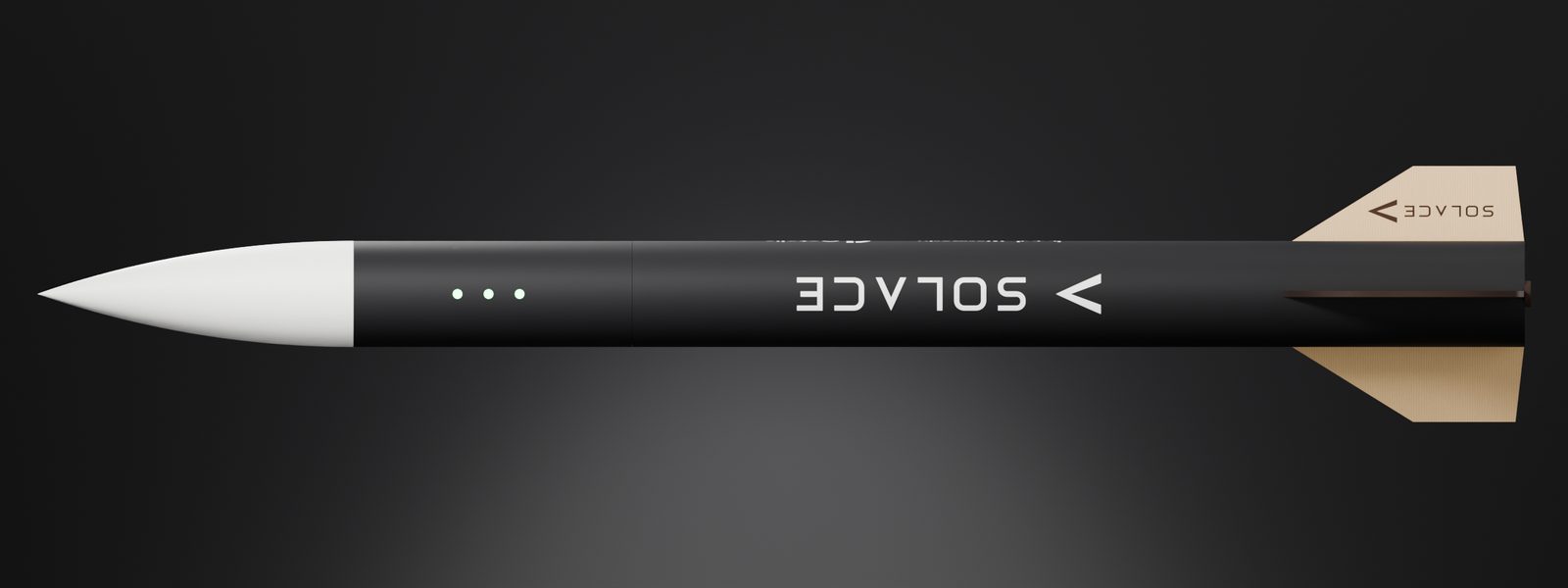
The average thrust must exceed three times the weight of the rocket at all stages of flight. UKRA recommends between 5 and 10 times. For NOVTAR Solace, which is estimated at 586 g loaded, the weight is about 5.75 N, so the numbers work out like this:
Our arithmetic: estimated loaded mass 586 g (a design estimate, not a measurement) times 9.81 m/s squared, then times the ratio. The motor is not chosen yet.
Source: UKRA Safety Code section 4.4 for the ratios. NOVTAR Solace design file for the mass (est.).
Data table
| Item | N |
|---|---|
| Legal minimum (3 times weight) | 17.2 |
| UKRA recommended low end (5 times) | 28.7 |
| UKRA recommended high end (10 times) | 57.5 |
See how to read a motor code to match a motor's average thrust to these figures.
What does the RSO check before you fly?
- Condition. The rocket is inspected for damage, wear and degradation from storage, transport or age.
- Stability. Before the rocket goes on the rail, the centre of gravity should be confirmed at least one calibre (one body tube diameter) ahead of the centre of pressure. See our stability guide.
- Igniters. For solid motors the igniter goes in at a designated place, usually the launch pad, just before launch, with the motor's exhaust facing away from people and anything flammable.
- Recovery. The rocket must be built to bring every part back safely, with the recovery system protected from the heat and forces of flight.
What are the weather limits?
The code (section 6.2.3) sets three wind numbers. Above 10 mph you choose the motor carefully so the rocket is flying stably before it leaves the rail, and watch for weather-cocking, where the wind turns the rocket into it. UKRA recommends no flying above 15 mph. Above 20 mph rockets must not be flown. Both you and the RSO should check that the wind at the expected flight height allows a safe, predictable flight and recovery.
Section 6.2.3 of the UKRA Safety Code. The 20 mph line is a rule, the 15 mph line is a recommendation and the 10 mph line is where you must choose the motor with care.
Source: UKRA Safety Code, section 6.2.3 (last updated 29 July 2025).
Data table
| Item | mph |
|---|---|
| Choose the motor with care above | 10 |
| UKRA recommends no flying above | 15 |
| Must not fly above | 20 |
Cloud matters too. It must be clear to a height where the rocket can be recovered safely and launched without any risk to aircraft. Night flights are not allowed unless the rocket is lit for the whole flight and cannot be mistaken for a distress flare.
What should the launch site and pad look like?
- More than 5 km from the nearest commercial airport or airfield.
- A way to manage public access, such as footpaths, and a clear view of the sky and the recovery area.
- A launch rod or rail within 20 degrees of vertical, long enough for the rocket to reach a stable speed before the guide leaves it, and rigid enough not to flex in wind.
- Clear of flammable material such as dry grass to a radius of three metres.
- A launch controller with a removable safety key and a momentary launch button that isolates the circuit when released.
A NOTAM (notice to airmen) must be issued to the CAA if flights may exceed about 120 metres (400 feet) above ground, at least 28 days ahead. The club normally deals with this. Our NOTAM guide covers what it is and what the form asks for.
How does a launch go, step by step?
- Get the RSO's approval to enter the launch area.
- Fit the rocket on the rail. It must slide easily along it.
- Everyone not needed leaves the launch area and goes back to a safe distance.
- The RSO gives final approval after checking weather, airspace and safety. The RSO should decline if you have not taken reasonable steps to make sure the rocket lands and can be recovered within the launch site.
- A clear countdown from at least five, audible to everyone and slow enough for anyone to shout a concern before ignition.
- Launch. The button goes down promptly after the countdown and comes up at ignition or after three seconds, whichever is sooner. The safety key comes out as soon as practical.
- Wait until the descent is fully complete before anyone walks out.
What if it does not go to plan?
Section 6.4.6 covers it. After a misfire, a failure to ignite or a catastrophic motor failure, the safety key must come out of the launch controller at once. In case of fire, only the minimum number of people needed to deal with it may approach. Otherwise nobody approaches the rocket until a fixed time has passed:
The RSO may decide a different wait at their discretion. Section 6.4.6 gives one minute for a catastrophic motor failure or a Low Power Rocket, and three minutes in all other cases.
Source: UKRA Safety Code, section 6.4.6.
Data table
| Item | min |
|---|---|
| Low Power Rocket, or catastrophic motor failure | 1 |
| All other cases | 3 |
Getting the rocket back
Section 6.5 says do not try to recover a rocket until its descent is fully complete, and never from a dangerous place or somewhere you have no permission to go. Nobody may approach a power line to free a rocket caught in one. Take care over crops, livestock and farm traffic. Do not pick up parts of a rocket you do not know how to handle: leave it and tell the flier where it is. Our recovery guide goes through this.
Wind has its own limits in the code. Our wind guide sets out the 10, 15 and 20 mph levels.
What about insurance, and what is not a normal club flight?
The code says insurance should be in place for all flights. It names the British Model Flying Association (BMFA) insurance as covering rocketry that follows the code.
Some things are classed as Research or Experimental under the code and have extra rules: non-commercial motors, liquid engines, any unproven design, and active stabilisation. Check section 8 of the code and talk to your RSO well before the day if your rocket has anything like this. Our electronics, TVC and GPS rules guide summarises what section 8 asks for.
Questions
Do I need to be a UKRA member to watch or fly?
The code does not say. Clubs set their own rules for guests, so ask the club before you go. Our guide to joining UKRA and finding a club covers the first steps.
Can I fly my own rocket on my first visit?
Ask the club first. The RSO inspects every rocket and can refuse any flight, and many clubs will want to see the rocket and know the motor in advance.
How windy is too windy?
Above 10 mph choose the motor with care. UKRA recommends no flying above 15 mph and the code forbids it above 20 mph.
Who says when I can launch?
Only the RSO. The code says no flier may launch without the RSO's explicit approval.
Is a home-made motor allowed?
No. Every solid motor must be commercially made and meet current legislation.
For the whole code in one place, see our UKRA Safety Code explained.
For the detail on cover and what it excludes, see model rocket insurance in the UK.
The spoken calls are explained in range open, hold and heads up.
For the order of jobs at the pad, see the model rocket countdown checklist.
How NOVTAR does it
NOVTAR Solace, our first rocket, has not flown. When it does, it will fly only on certified motors at a UKRA club launch with the RSO in charge. Read our safety page, the Solace build book and the launch day page, which covers the questions to ask your club and a packing list.