Flight computer Designed, not built
Lodestar Lite
The cheap 2-layer board NOVTAR Solace will fly first.
Designed and checked in KiCad, not built yet. This is the board Solace's first prototype flights use; the 4-layer Lodestar flies later.
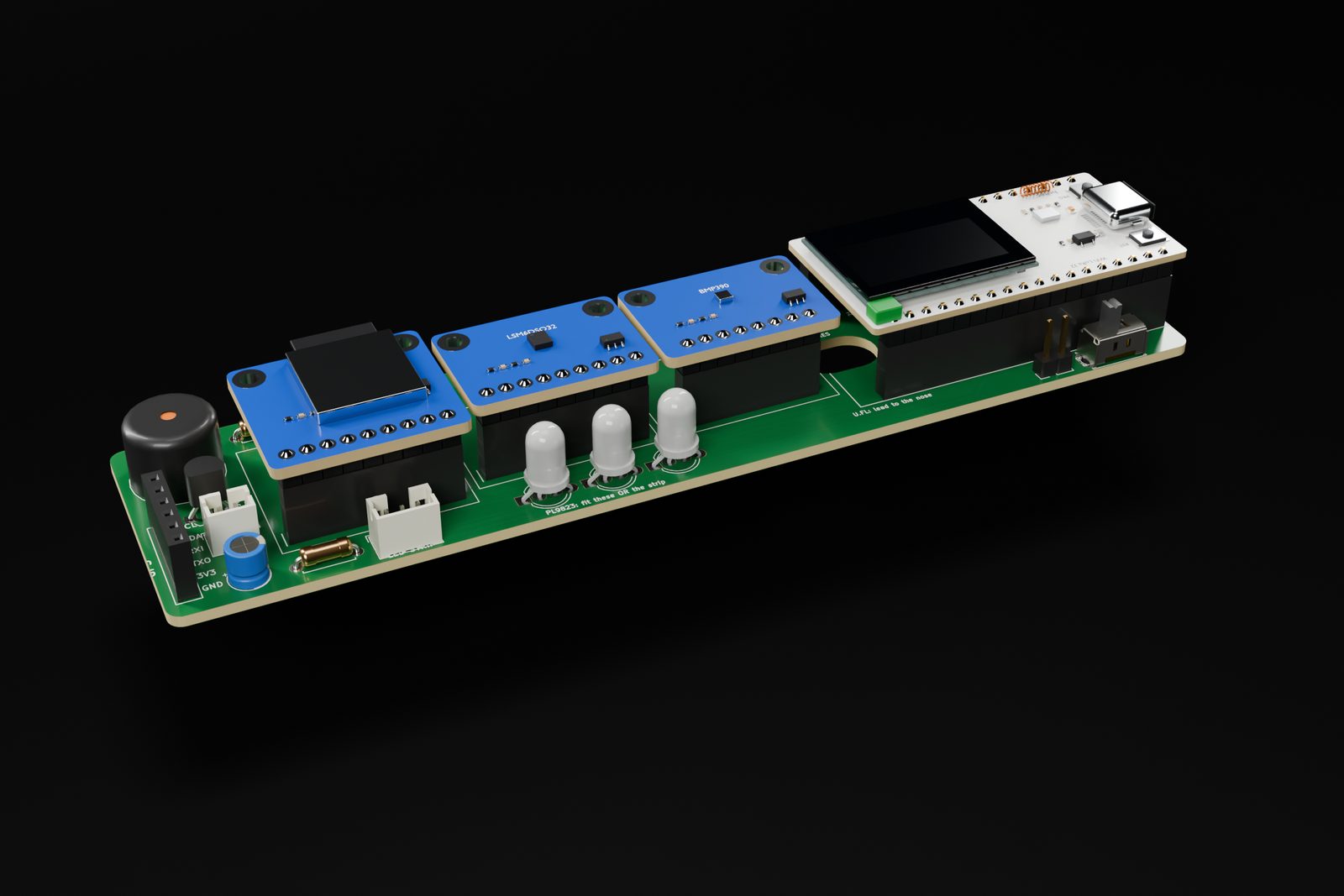
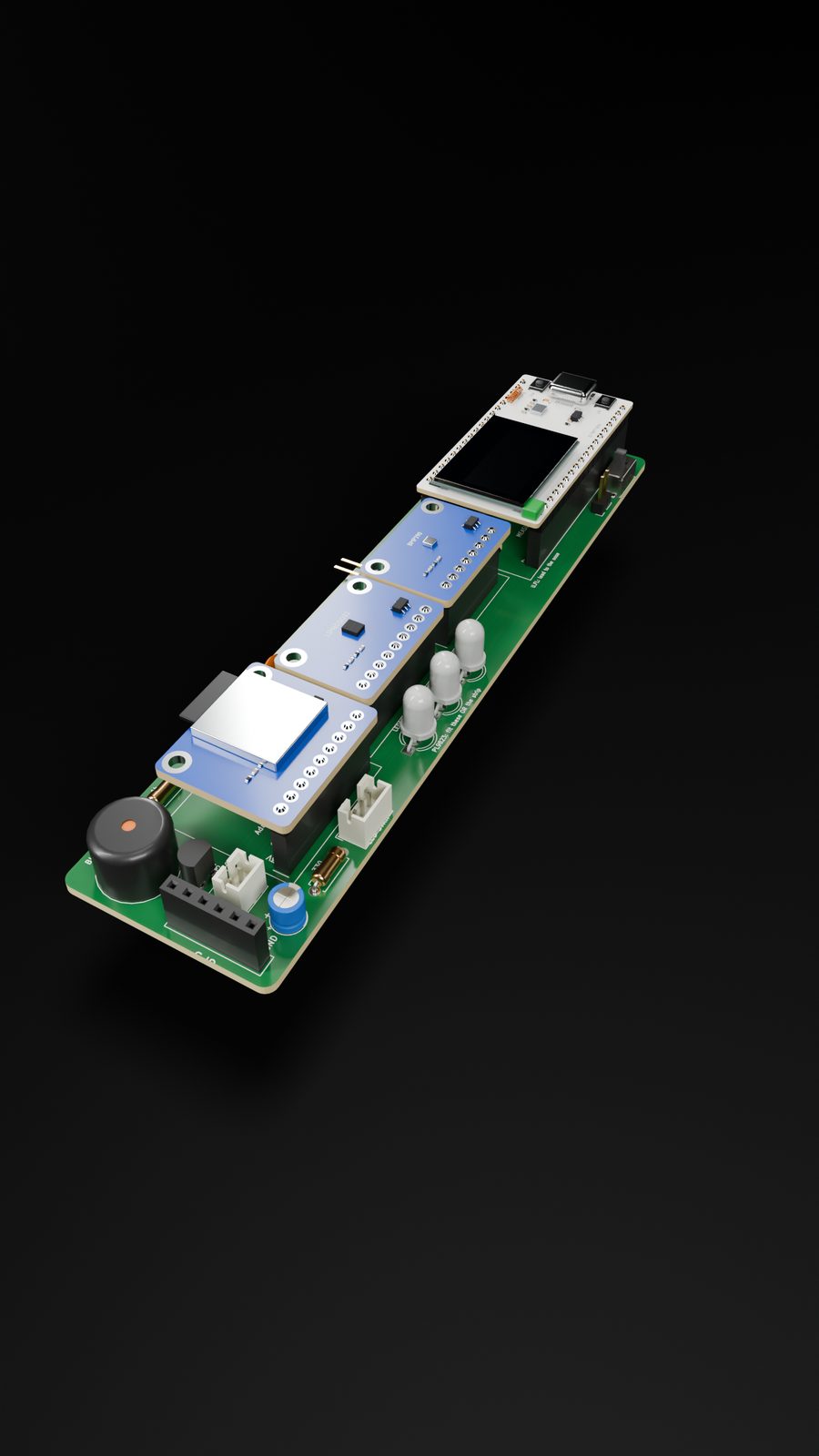
Render
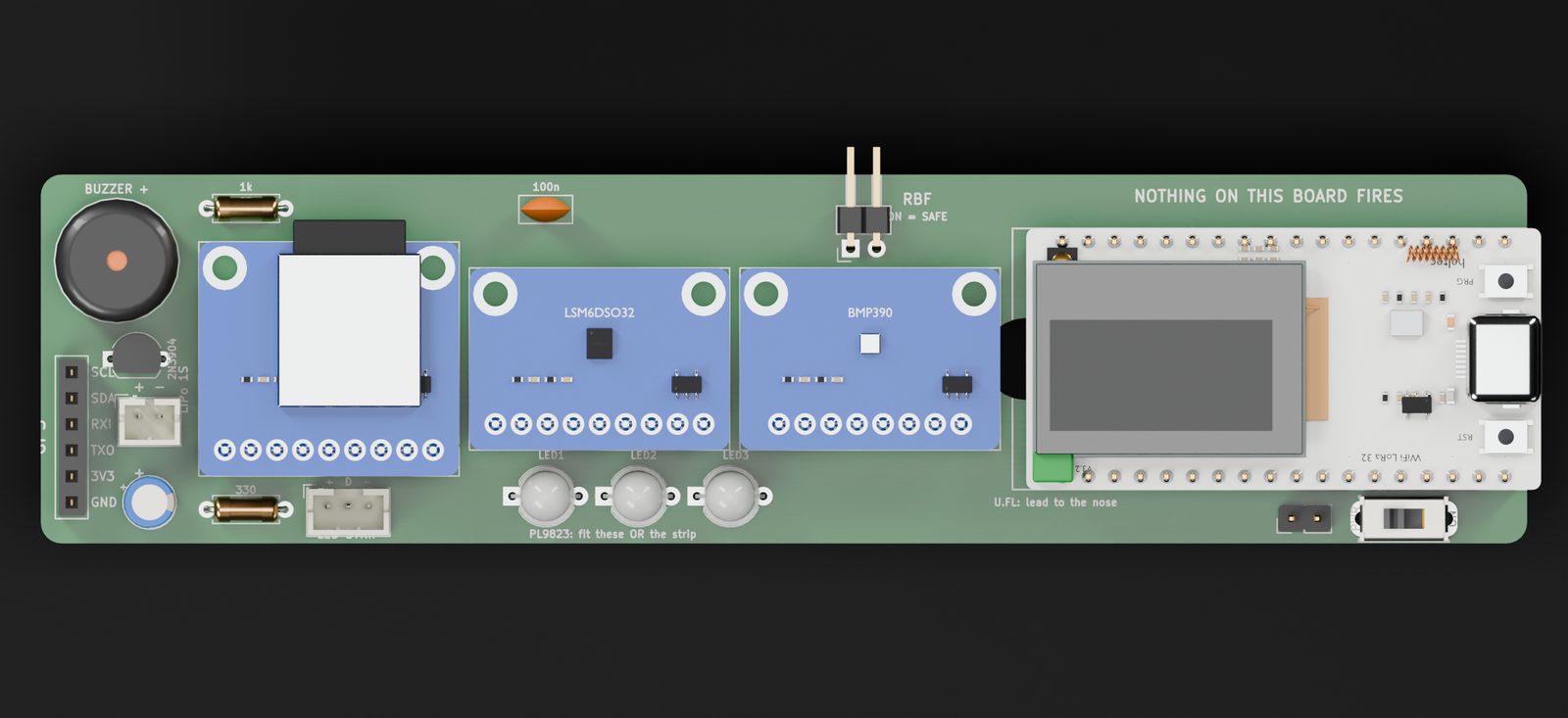
ScrollA 145 x 36 mm two-layer board you can solder by hand: the Heltec WiFi LoRa 32 V3 and ready-made Adafruit breakouts for the barometer, IMU and microSD plug into female headers, with sockets for a GPS lead, the 1S battery, the LED strip and the remove-before-flight jumper. Measure-only: it has no servo, motor or firing output of any kind. Designed and checked in KiCad, not built yet. It is what Solace's first prototype flights use.
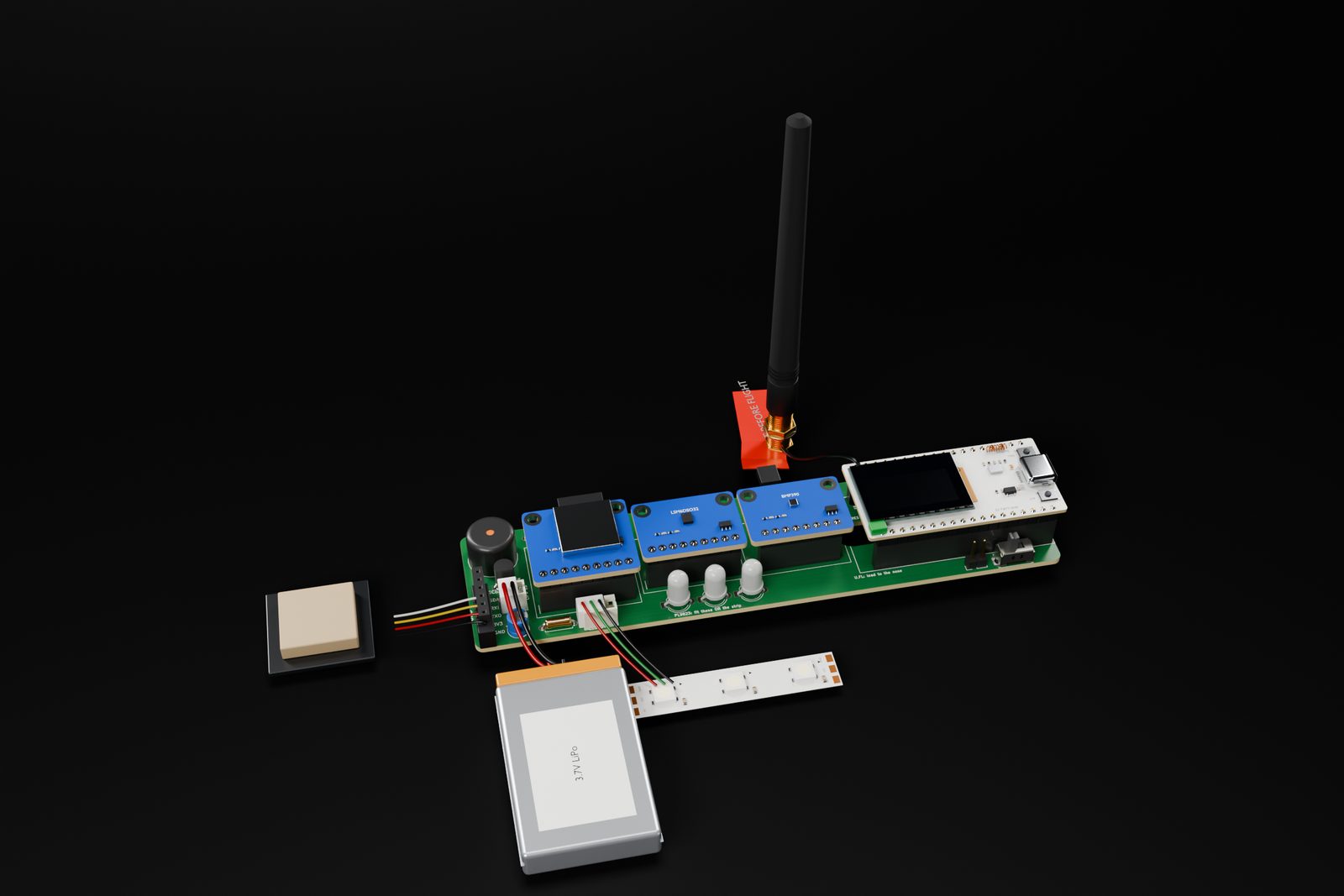
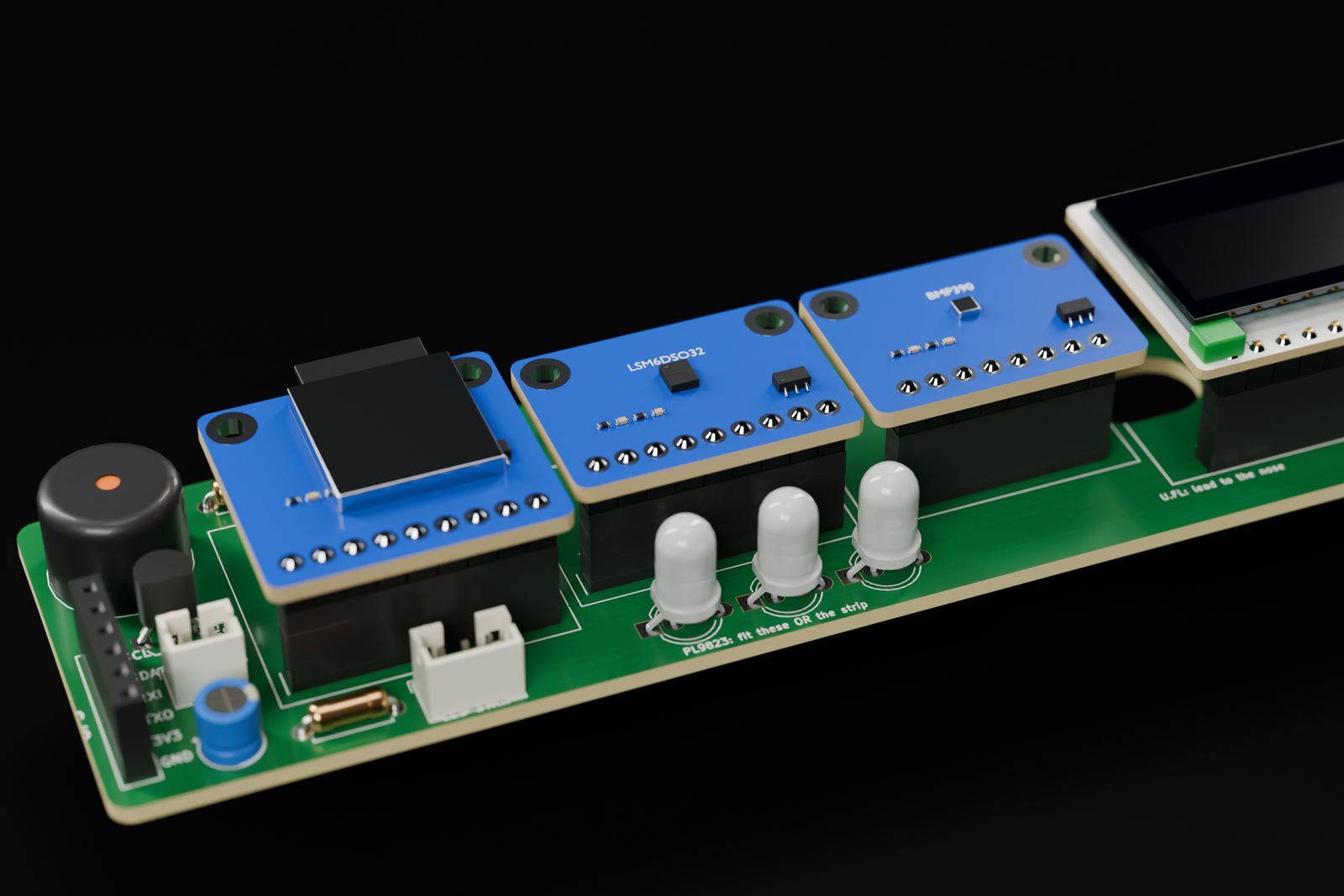
Nothing fine-pitch to solder.
The Heltec and three ready-made breakouts plug into female headers. Everything you solder is through-hole.
The Heltec, the barometer, the IMU, the card.
Each plug-in comes off its own socket, so a bad breakout is swapped in seconds, not desoldered.
Measure-only, by design.
Lite has no servo, motor or firing output of any kind. It measures, logs and radios, and that is all.
Render
Lodestar Lite in numbers
- Board
- 145x 36 mm
- Copper layers
- 2
- Plug-in boards
- 4
- DRC errors
- 0
Lodestar Lite Overview
Lodestar Lite. The cheap 2-layer board NOVTAR Solace will fly first.
A 145 x 36 mm two-layer board you can solder by hand: the Heltec WiFi LoRa 32 V3 and ready-made Adafruit breakouts for the barometer, IMU and microSD plug into female headers, with sockets for a GPS lead, the 1S battery, the LED strip and the remove-before-flight jumper. Measure-only: it has no servo, motor or firing output of any kind. Designed and checked in KiCad, not built yet. It is what Solace's first prototype flights use.
Lodestar Lite is the simple flight computer NOVTAR Solace will fly first: a two-layer board, 145 x 36 mm, that you can solder by hand. A Heltec WiFi LoRa 32 V3 and ready-made breakouts plug into headers. It only measures: it has no servo, motor or firing output. It is designed and checked in KiCad but not built yet. The full-spec version is Lodestar, and the hand-wired starting point is Lodestar Dev. New to this? Read how a model rocket flight computer works and how LoRa telemetry works.
Key numbers
- Board
- 145 x 36 mm
- Copper layers
- 2
- Plug-in boards
- 4
- DRC errors
- 0