Launch Link
Every part of the launch, linked.
Mission Control, the ground station, the drum and the rocket, working as one. Mission Control runs the checks and the countdown and launches; a person holds it, and the safety key and the drum's own timers stop it. Tested in simulation only.
The system
Five parts, one sequence.
Mission Control on the laptop, the ground station on its USB-C lead, the drum, the pad lights and Solace with its flight computer. Click any part, or play the sequence.
Every check green.
The laptop at the base station: the rocket's sensors, every radio link, the key, continuity and the range, all green before GO is allowed.
One radio for the rocket, one for the kit.
LoRa down from Solace, ESP-NOW out to the drum, USB-C to the laptop. It runs the countdown.
The hand-held controller is gone.
This film was made before 19 November. Since then the safety key and the two relays sit in the drum under the pad's hub, and Mission Control launches.
A person holds it.
Mission Control launches, a person holds it, and hardware the software can't reach stops it. Let go and the FIRE relay opens.
The pad counts down with you.
The lights on the legs empty second by second, so everyone on the field can see where the countdown is.
Hold to launch.
The window opens and a person holds launch in Mission Control. A visualisation from before the Ignis pad box: nothing has flown yet.
The sequence
From checks to the hold.
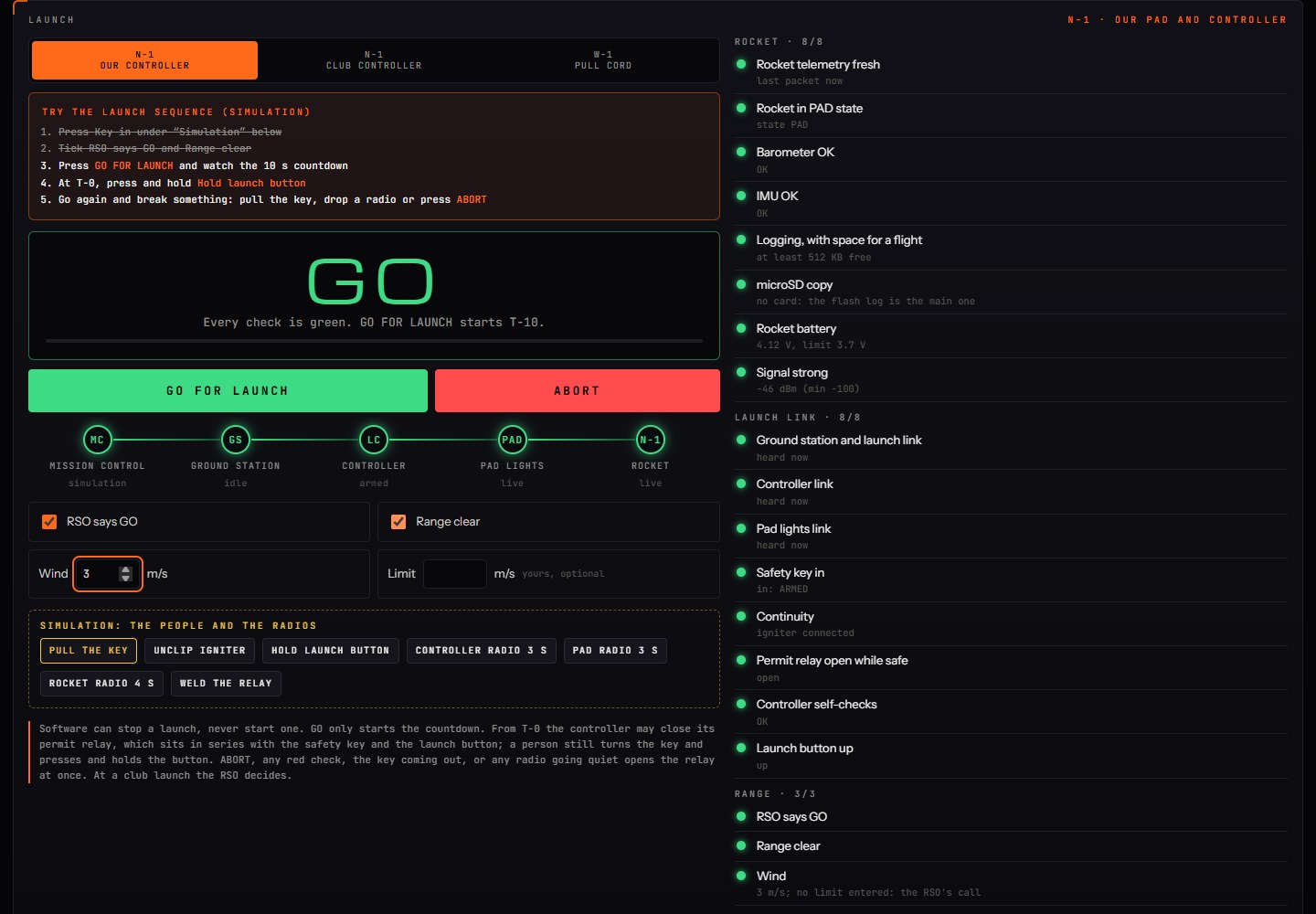
- ChecksEvery line greenThe rocket's sensors, logging and battery, every radio link, the arming plug in, continuity, both relays open, plus RSO says GO, range clear and the wind (the RSO's call).
- GOA person presses GOGO FOR LAUNCH only works when everything is green. It starts the countdown; it can't fire anything.
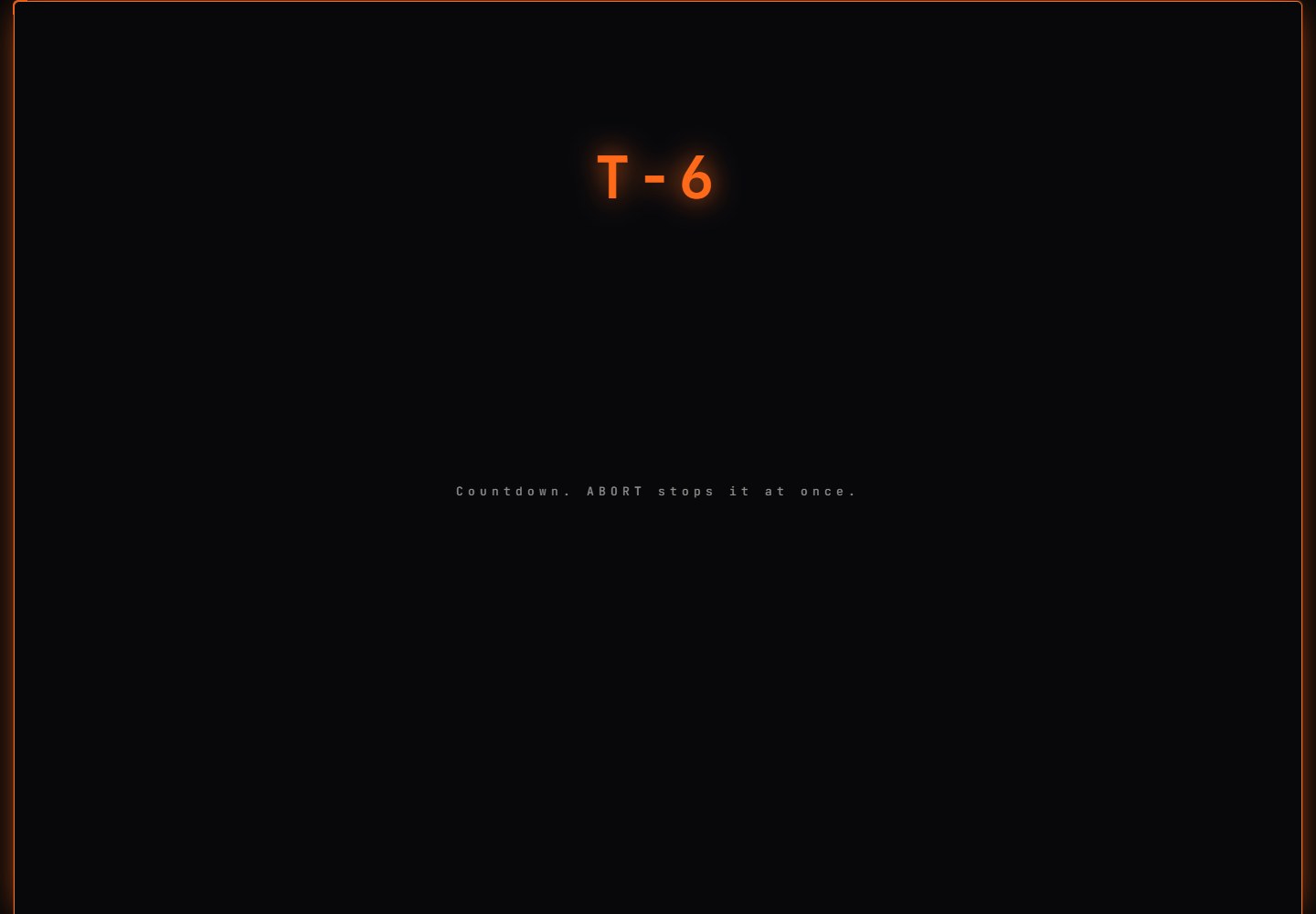
- CountdownT-10 everywhereMission Control and the pad lights count down together. Any red check, the key out or a radio going quiet stops it.
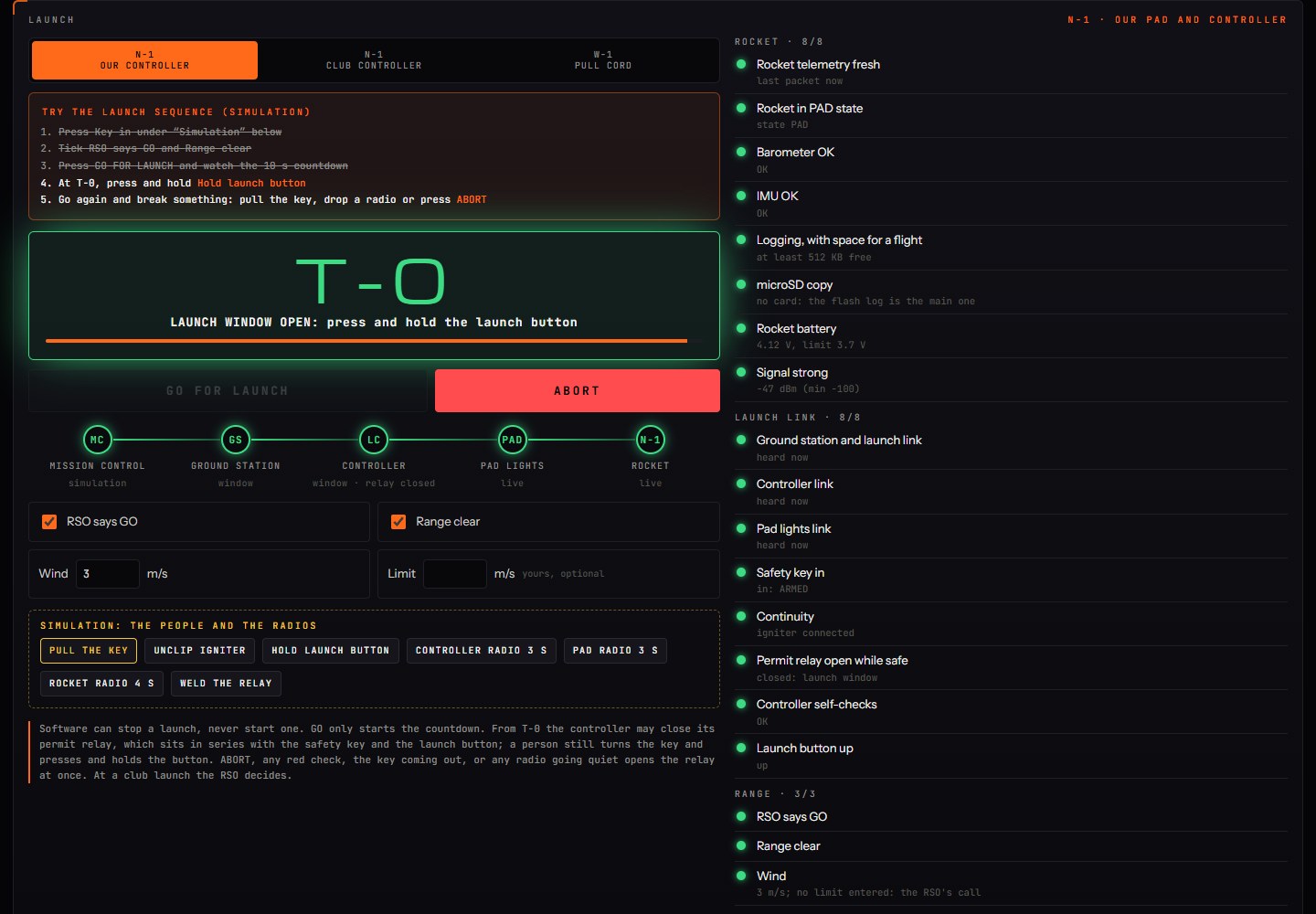
- WindowT-0 to T+30 sThe drum closes ARM. A person holds Hold to launch: FIRE closes while they hold it, 3 s at most. Nothing held in 30 s: the permit runs out.
- Hold3 minutesAfter any firing, nobody goes to the pad for three minutes (UKRA, for an F or G motor).
The rule
Mission Control launches, a person holds it, and hardware the software can't reach stops it.
Since 19 November there is no hand-held launch controller. The firing loop is all in the drum under the pad’s hub: the arming plug, then two normally open relays in series. The plug is a person’s and no board can close it. ARM closes only in the launch window the drum watched count down itself; FIRE only while a person holds Hold to launch in Mission Control, and the drum opens it on its own timers if the messages stop. Any one of these opens the relays at once:
At a club launch the RSO decides. If the club uses its own launch system, our drum stays switched off with the plug out and Mission Control runs only the rocket checks and a countdown, sending nothing. Nimbus’s pull-cord launcher stays manual.
In Mission Control
The Launch card, in Simulation.
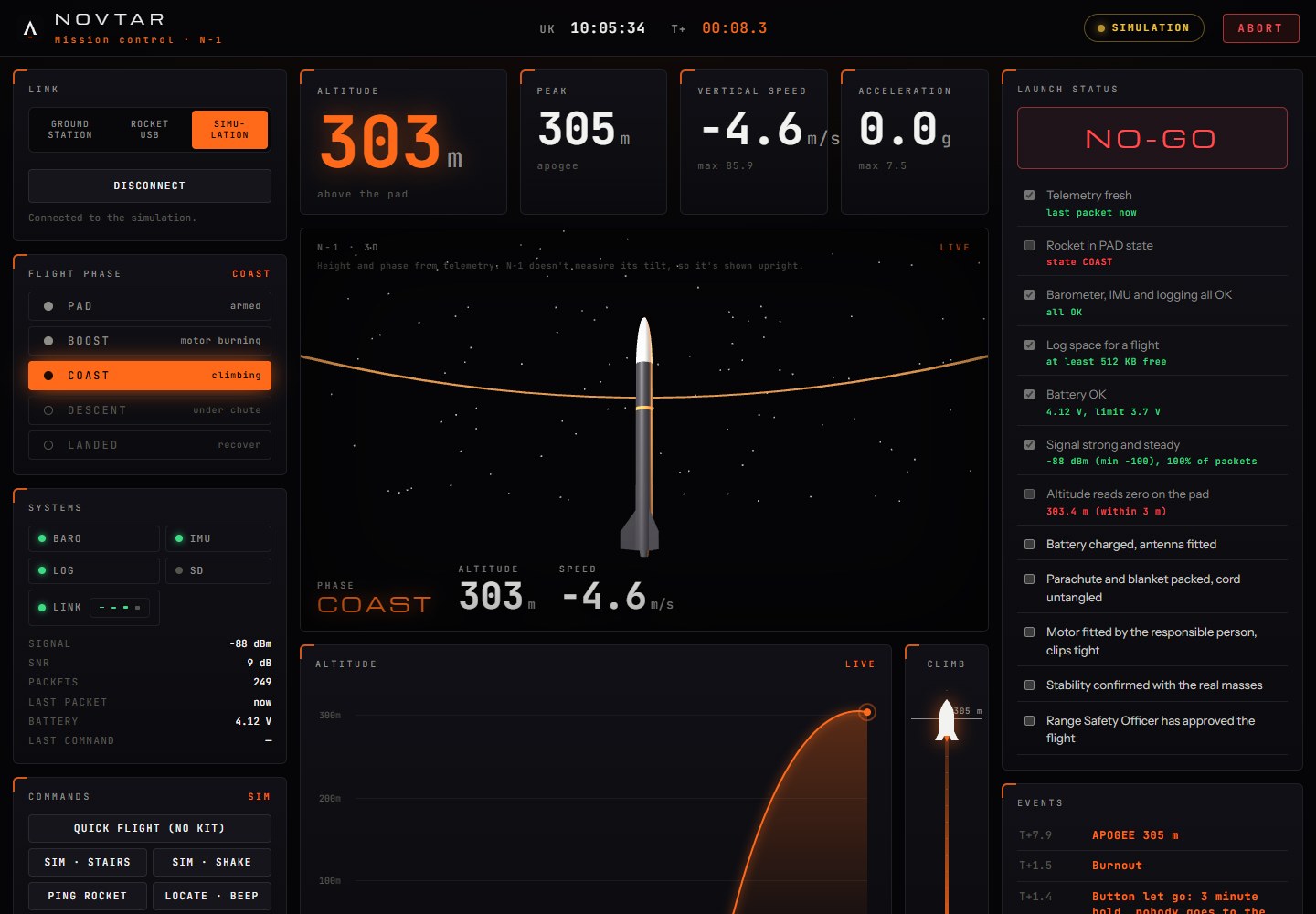
Screenshots taken in Simulation mode: a simulated kit that copies the firmware's logic, so the whole sequence can be tried with no hardware.
Where it stands
Tested in simulation. Not built yet.
- Done: the drum and ground station firmware, the Launch card with Hold to launch in Mission Control, and the drum in the Harbour's design, laser files, 3D model and build book.
- Tested: in Simulation only, against a simulated kit that copies the firmware's logic.
- Not tested on hardware: none of it is built yet. The build book has bulb tests to do first, never with an igniter fitted.
- Radio lock (version 4, 20 November): the drum and its ground station are paired with a shared key, and every message is signed. The drum ignores anything else, so a stranger’s radio, another kit on the field or a recording of an earlier launch can’t start a countdown. Tested by compiling both boards’ firmware and in Simulation.
- Smart pad (version 4): the drum reports the rail’s tilt and the firing battery’s voltage. They can only hold a launch: a rail tilted past 20 degrees (the angle our exhaust check covers) is NO-GO; the wind is the RSO’s call. Nothing a sensor reads can start one.
- Every board runs the same link version (version 4), so the drum and the ground station are flashed together.
Everything it links
Jump to any part.
Solace
The rocket on the rail, and the flight computer inside it.
ElectronicsFlight computer
Sends the rocket's health down twice a second. Fires nothing.
Base stationGround station
The radio on the laptop's USB-C lead that runs the countdown.
Base station · 3DPad and drum
Turn them round in 3D: the drum under the hub with its arming plug and relays, and the pad lights.
SoftwareMission Control
Every flight live, and the Launch card with GO and ABORT.
Build bookWiring and bench tests
The drum's wiring and pins, and the bulb tests to do first.
RocketNimbus
The water rocket keeps its pull cord: Mission Control runs its checks and countdown only.
SafetyHow we launch
UKRA clubs, certified motors, and the RSO in charge.