Updated 2026-11-28 · 4 min read
Where does this come from?
The facts are from the Met Office page "Thunder and lightning", read on 28 November 2026, and the UKRA Safety Code, read the same day. Anything marked "our arithmetic" or "our reading" is ours.
What is a thunderstorm?
The Met Office describes a thunderstorm as a series of sudden electrical discharges. It says thunderstorms happen when warm air lies under much colder air. In the UK the most severe ones are in summer, and they are most common over the East Midlands and the south east.
What is lightning?
The Met Office calls lightning a huge electrical discharge. It can jump between clouds, from cloud to air, or from cloud to ground. The air in the lightning channel can reach up to 30,000 degrees C. The Met Office says a bolt is on average about 2 to 3 cm wide and 2 to 3 miles long, and that about 44 strikes hit the Earth's surface every second.
How do you tell how far away a storm is?
Count the seconds between the flash and the thunder. The Met Office gives the rule: divide the seconds by five to get the distance in miles, or by three to get kilometres. It adds that thunder is rarely heard beyond about 20 km.
Our arithmetic from that rule: a gap of 15 seconds is about 3 miles, or 5 km. A gap of 30 seconds is about 6 miles, or 10 km.
Can a storm be dangerous without lightning overhead?
Yes. The Met Office says it is not only the lightning that is dangerous, but other things linked to thunderstorms, such as intense rain and tornadoes. It also describes "positive lightning", which comes from the positively charged top of a cloud, goes around the negatively charged base and can strike a mile or more away from the storm cloud. That is where the phrase "a bolt from the blue" comes from.
How is lightning detected?
Lightning sends out pulses of radio waves, which the Met Office calls sferics. Its LEELA system uses a network of 11 sensors around Europe, which pick up each pulse at slightly different times. The difference in arrival time lets the network work out where the strike was.
What does this mean on a launch field?
The UKRA Safety Code sets wind limits: rockets must not be flown in winds above 20 mph, and UKRA recommends not flying above 15 mph. It also says the Range Safety Officer (RSO) has final approval for a launch and must make final weather, airspace and safety checks first. We did not find lightning or thunder mentioned in the Safety Code text we read.
Our reading: there is no published launch rule from UKRA about thunder to quote here, so do not treat the Met Office distance rule as one. If thunder is audible near a launch site, ask the RSO and follow their decision.
What about NOVTAR Solace?
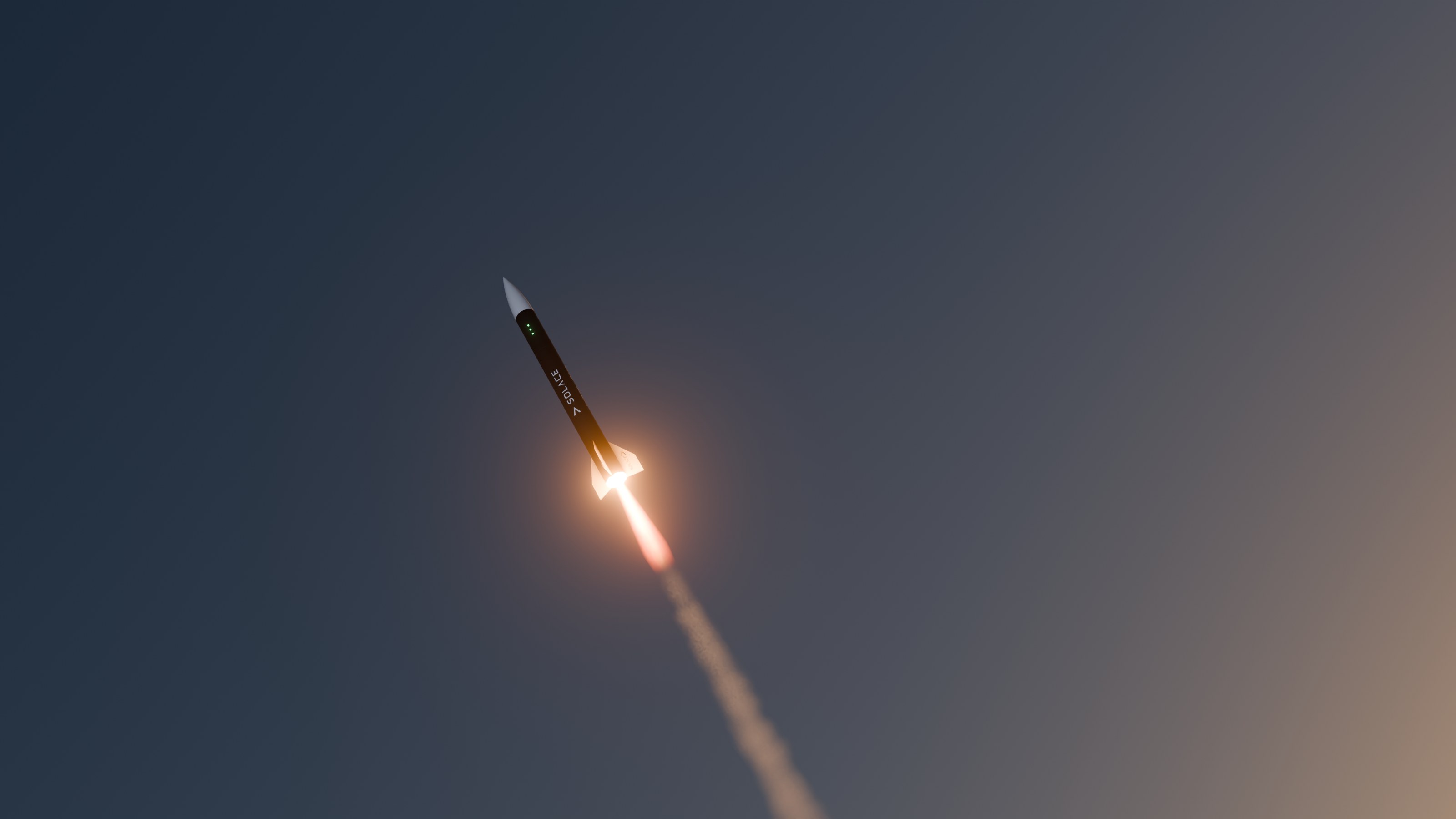
NOVTAR Solace is in design and has not flown. Nothing here is a Solace test result.
Questions
What is lightning?
The Met Office calls it a huge electrical discharge between clouds, from cloud to air or from cloud to ground.
How do you work out how far away lightning is?
Count the seconds between the flash and the thunder. Divide by five for miles or by three for kilometres, as the Met Office says.
How far away can you hear thunder?
The Met Office says thunder is rarely heard beyond about 20 km.
How hot is a lightning bolt?
The Met Office says the air in the channel can reach up to 30,000 degrees C.
How many lightning strikes are there every second?
The Met Office says about 44 strikes hit the Earth's surface every second.
When is a thunderstorm most likely in the UK?
The Met Office says the most severe ones are in summer, and they are most common over the East Midlands and the south east.
Does UKRA say when to stop a launch for thunder?
We did not find thunder or lightning in the UKRA Safety Code text we read. It does say the RSO makes the final weather check and can decline a launch.
Has NOVTAR Solace flown?
No. NOVTAR Solace is in design and has not flown.
Next steps
- How windy is too windy to launch a model rocket?
- What is the speed of sound?
- Flying at a UKRA club launch
- What are cumulus, stratus and cumulonimbus clouds?
- What is a tornado and do they happen in the UK?
- What do Met Office weather warning colours mean?
Read the original: Met Office, Thunder and lightning. Your club's RSO decides on the day.