Updated 2026-11-28 · 4 min read
Where does this come from?
This guide uses the Met Office "Weather warnings guide" (a guide to the National Severe Weather Warning Service), read on 28 November 2026. The Met Office page notes that from October 2026 the warnings impact matrix has changed slightly, with new impact level terminology, so older descriptions may differ. Anything marked "our reading" is our view, not the Met Office's.
What do yellow, amber and red warnings mean?
The Met Office says the colour depends on a combination of the impact the weather may have and the likelihood of those impacts.
| Colour | What the Met Office says |
|---|---|
| Yellow | Issued for a range of situations. Many are a high likelihood of some moderate impacts, such as some travel disruption in a few places. Others are much more significant impacts but with much lower certainty. Read the content to see which applies. |
| Amber | An increased likelihood of impacts from severe weather that could disrupt your plans, such as travel delays, road and rail closures, power cuts and a potential risk to life and property. Think about changing your plans. |
| Red | Dangerous weather is expected. A very high likelihood of a risk to life, with substantial disruption to travel and energy supplies and possibly widespread damage. Avoid travelling where possible and follow the advice of the emergency services and local authorities. |
What weather do the warnings cover?
The Met Office says it provides warnings up to seven days ahead for rain, thunderstorms, wind, snow, lightning, ice, extreme heat and fog. Each warning has a headline, a "what to expect" section, a "what should I do" section and further details, which includes the impact matrix showing which box of impact and likelihood has been ticked.
Where can you find the warnings?
The Met Office lists its app and website, social media, email alerts, TV and radio, RSS and the NSWWS API. On its website a warnings banner shows on the homepage when a warning is in force, and the Weather Warnings page shows a UK map with the next seven days on tabs. If a warning is in force for a place you have saved, a warning triangle appears on that place.
What should you check before a rocket launch?
Our reading: the UKRA pages we have read set limits by measured conditions, such as wind speed, and do not set a rule by warning colour. So treat a warning as a reason to look again, not as a launch rule. Before you travel:
- Open the Met Office warnings page for the day and the area of your launch site.
- If there is a warning for wind, thunderstorms, lightning, rain, snow, ice or fog, read the details and the matrix, not just the colour.
- Compare the forecast wind with the UKRA limits in our wind guide, and see our lightning guide for storms.
- Ask your club. The Range Safety Officer decides on the day.
What about NOVTAR Solace?
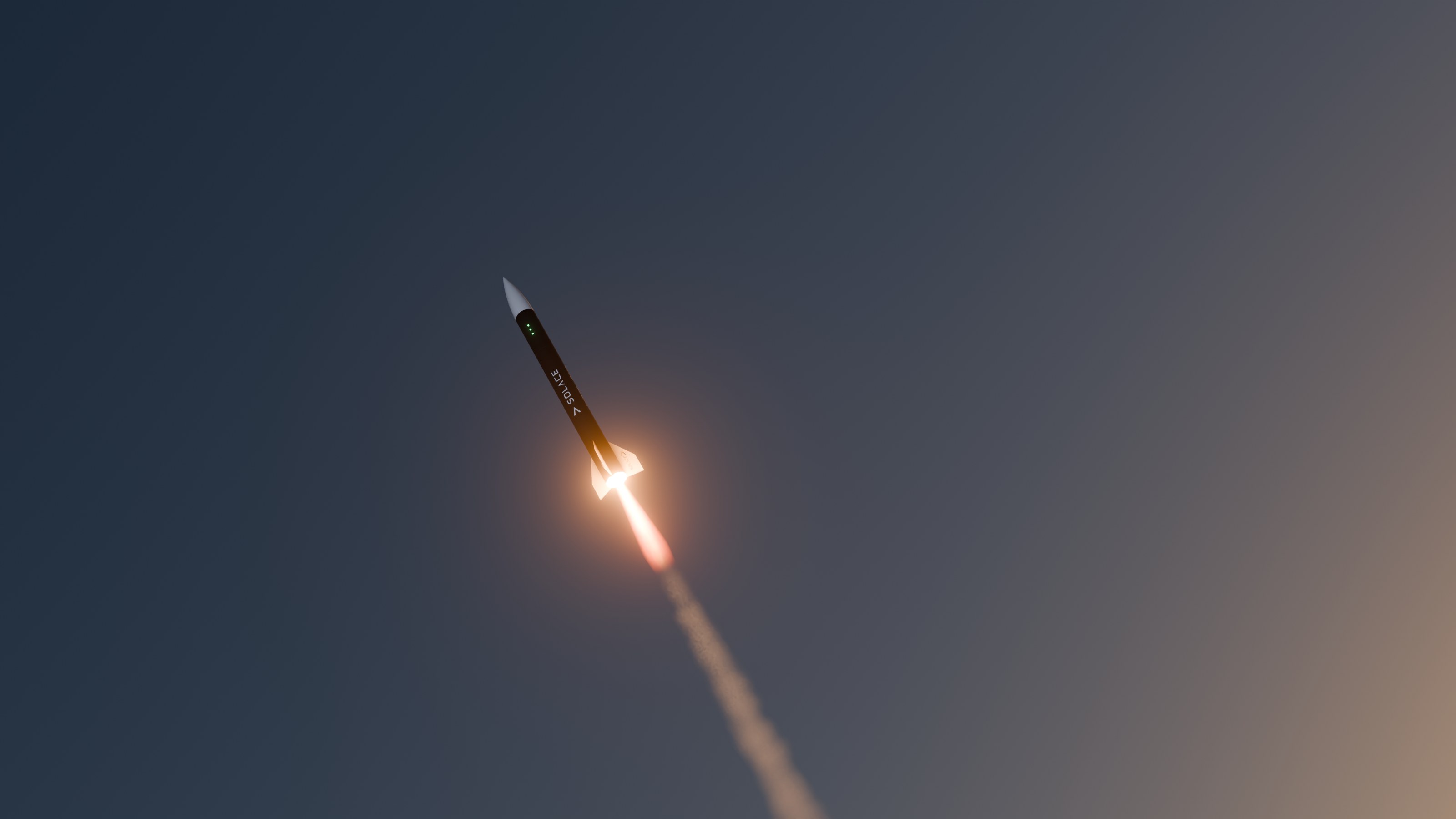
NOVTAR Solace is in design and has not flown. It will fly only at a club launch, where the club decides whether conditions allow.
Questions
What do the Met Office warning colours mean?
Yellow, amber and red show the combination of impact and likelihood. Yellow is lowest, red means dangerous weather is expected.
What is the difference between yellow and amber?
The Met Office says amber means an increased likelihood of impacts that could disrupt plans and a potential risk to life and property, so think about changing plans. Yellow covers a wider range, from moderate impacts to rarer significant ones.
What weather types do Met Office warnings cover?
Rain, thunderstorms, wind, snow, lightning, ice, extreme heat and fog, up to seven days ahead.
Where can you see Met Office warnings?
On the Met Office website and app, by email alerts, social media, TV and radio, RSS and the NSWWS API.
Does UKRA set a launch rule by weather warning colour?
Not on the UKRA pages we have read. Its limits are on measured conditions such as wind speed. Your club decides on the day.
Has NOVTAR Solace flown?
No. NOVTAR Solace is in design and has not flown.
Next steps
- How windy is too windy to launch a model rocket?
- What is lightning and how far away is a thunderstorm?
- What is the Beaufort wind scale in knots and mph?
- How are weather forecasts made, step by step?
- What do Met Office temperature colours mean?
Read the original: Met Office, Weather warnings guide. Your club's RSO decides on the day.