Updated 2026-11-29 · 3 min read
Where does this come from?
The facts are from the Estes Education page "New to Model Rocketry", read on 29 November 2026. Estes is an American maker, so the launch-area sizes on its page are not the UK rules. We take only its motor advice. Anything marked "our reading" is ours.
What does the delay number mean?
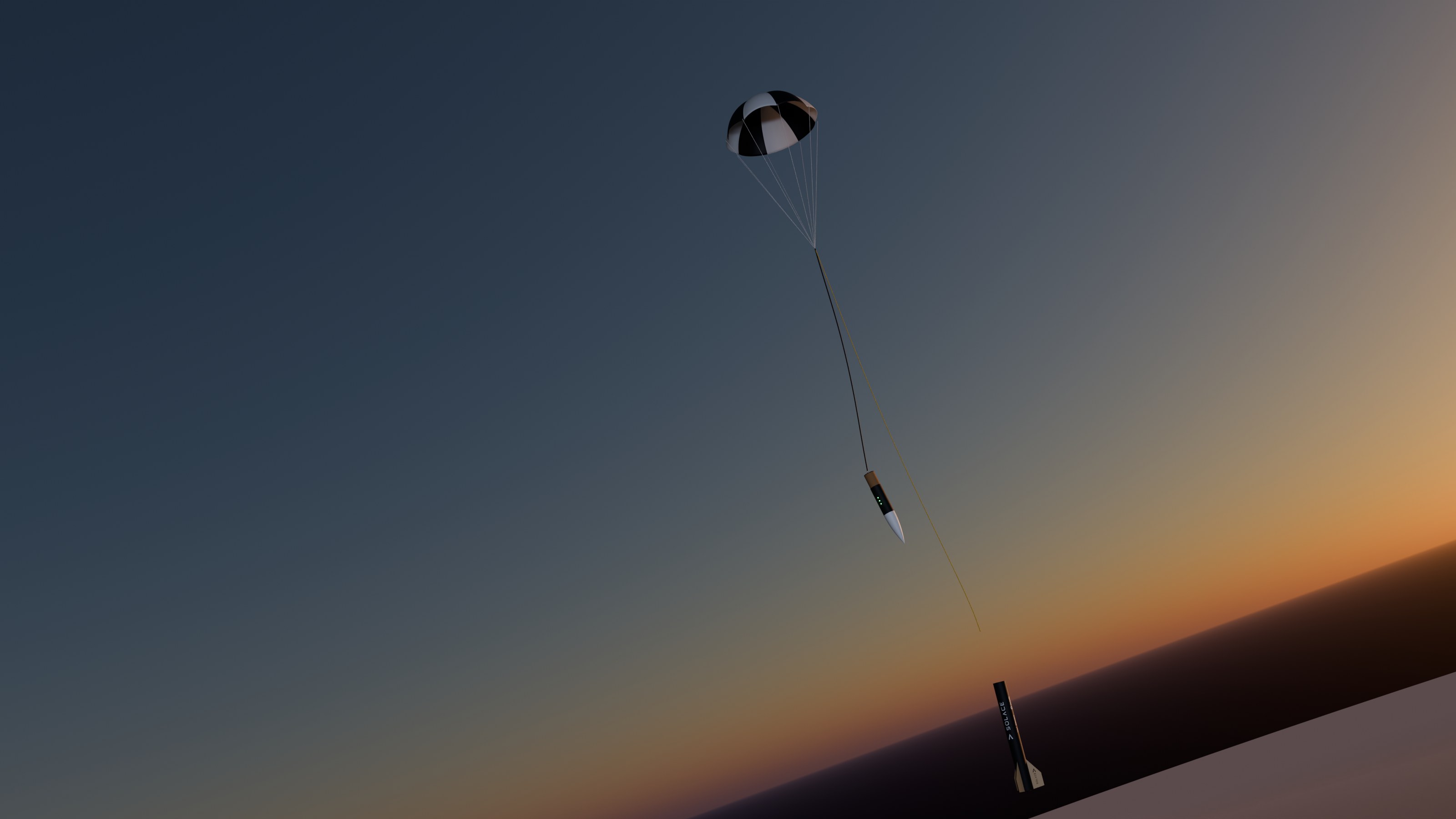
Estes says the final number in the code is the time delay in seconds before the recovery system, a parachute or streamer, is deployed. For example, the 4 in B6-4 is a four-second delay. Our motor codes guide explains all three parts of a code.
When do you want a longer delay?
Estes says a longer delay is ideal for a lightweight rocket or calm weather, because it allows for higher altitude before deployment.
When do you want a shorter delay?
Estes says a shorter delay is best for windy conditions or two-stage rockets. It says this gives a safe recovery in wind and proper staging in two-stage rockets.
Our reading: in wind, a shorter delay means the recovery system comes out sooner, which may reduce how long the rocket spends under canopy, but Estes does not say that. Our drift guide covers how far a rocket can travel.
What does the thrust number change?
The number before the delay is the average thrust. Estes lists these effects of a higher number:
- On windy days, higher thrust helps the rocket clear the launch area quickly.
- Heavier rockets, or rockets that carry a payload, need higher thrust to lift off safely.
- High thrust produces more drag, so those rockets may not reach the same altitude as lower-thrust motors.
Does the letter change how big a field you need?
Estes says its smallest motors, a half A or A, need a 100-foot square area, and each following letter doubles in power, so you need to double the launch space. That is the American advice. In the UK, use the minimum site sizes in our launch site guide, which follow the UKRA Safety Code.
How do you pick the right delay for your rocket?
Estes's page gives the trade-offs above, not a formula. For a rocket you have designed, the usual check is a simulation. Our OpenRocket guide shows how, and our motor choice guide covers the Estes manual's other advice. Your club's Range Safety Officer (RSO) has the final say on the day.
What about NOVTAR Solace?
NOVTAR Solace is in design and has not flown. Nothing here is a Solace test result.
Questions
What does the last number in a model rocket motor code mean?
Estes says it is the time delay in seconds before the recovery system, a parachute or streamer, is deployed.
When should you use a longer delay?
Estes says a longer delay is ideal for lightweight rockets or calm weather, because it allows higher altitude before deployment.
When should you use a shorter delay?
Estes says a shorter delay is best for windy conditions or two-stage rockets, for safe recovery and proper staging.
Does higher thrust help on a windy day?
Estes says higher thrust helps the rocket clear the launch area quickly on windy days, but it adds drag, so the rocket may not climb as high.
Do heavier rockets need a higher thrust number?
Estes says heavier rockets, or rockets that carry a payload, need higher thrust to lift off safely.
Has NOVTAR Solace flown?
No. NOVTAR Solace is in design and has not flown.
Next steps
- Model rocket motor codes explained
- How to choose the right model rocket motor
- How does a two-stage model rocket work? Explained
- How to read a model rocket thrust curve
Read the original: Estes Education, New to Model Rocketry. Your club's RSO decides on the day.