Updated 2026-11-21 · 7 min read
In short: the UKRA Safety Code sets rules for where model rockets can be launched and how they are fired: the site must be more than 5 km from the nearest commercial airport or airfield, the launch controller must have a removable safety key and a momentary launch button, and a NOTAM is needed if flights may go above about 120 metres. NOVTAR Solace, our first model rocket, is built to fly at a club launch where the club takes care of this. It has not flown yet.
Choosing the site (sections 5.1 and 5.2)
A launch site must be a suitable open area for launching and recovering rockets, with the land owner's or occupier's permission. It must:
- Be more than 5 km from the nearest commercial airport or airfield.
- Be more than 1 km from any area where distress flares may be used, such as large lakes, mountains or the coast, unless the relevant authorities (for example the coastguard or mountain rescue) have given permission first.
- Have a way to manage public access, for example stopping launches while people use a public footpath in the launch area.
- Have a way for the Range Safety Officer (RSO) to tell everyone on site about launches and heads-up flights.
- Give the RSO a view to check the skies are clear, clear lines of sight to the likely recovery areas, and a clear recovery area both upwind and downwind.
How big must the site be?
UKRA's launch site dimensions page (last updated 4 March 2026) gives the minimum size as the diameter of a circle centred on the launch pad, set by the total impulse of the motor. Bigger motors need much more room:
UKRA's whole table, with classes that share a value merged: E, F and G are all 300 m, and H to M are all 450 m. Solace's motor class is not chosen yet.
Source: UKRA, Launch Site Dimensions, ukra.org.uk/safety/safety-code/launch-site-dimensions (updated 4 March 2026).
Data table
| Item | m |
|---|---|
| A (up to 2.5 Ns) | 30 |
| B (2.5 to 5 Ns) | 60 |
| C (5 to 10 Ns) | 120 |
| D (10 to 20 Ns) | 150 |
| E, F, G (20 to 160 Ns) | 300 |
| H to M (160 to 10,240 Ns) | 450 |
| N (10,240 to 20,480 Ns) | 600 |
| O (20,480 to 40,960 Ns) | 900 |
The site minimum is the largest of three numbers: the table value for the flight's total impulse, the table value for twice that impulse if the flight is Research or Experimental, and half the maximum expected altitude of any rocket flown. UKRA's own example: a J class rocket flying to 12,000 feet needs a 6,000 foot site, because half the altitude beats the table's 1,476 feet. UKRA also offers a map-based launch site tool on its members' site.
How far back should people stand?
The minimum launching distances page (last updated 29 July 2025) sets how far anyone not directly involved must be from the launch rail. The RSO may reduce it at their discretion for people needed to run the launch, as long as safety can be assured. The next distance up the table applies to boosted gliders, winged recovery and Research or Experimental flights.
Selected rows of UKRA's table for a single motor. Multiple motors need more: for example 6 m for B and C class, and 20 m for F and G class. Rockets that use thrust vector control must be launched from at least 200 m.
Source: UKRA, Minimum Launching Distances, ukra.org.uk/safety/safety-code/safe-launching-distances (updated 29 July 2025).
Data table
| Item | m |
|---|---|
| A (up to 2.5 Ns) | 2 |
| B, C (2.5 to 10 Ns) | 3 |
| D (10 to 20 Ns) | 5 |
| E (20 to 40 Ns) | 7 |
| F, G (40 to 160 Ns) | 10 |
| H (160 to 320 Ns) | 15 |
| I, J (320 to 1,280 Ns) | 45 |
That 200 m rule for thrust vector control matters to us. Solace TVC steers its motor, so it is not an ordinary club flight, and it would have to follow the 200 m distance and the extra Research or Experimental rules. The UKRA electronics, TVC and GPS rules guide sets out what a Research flight asks for.
Airspace and the NOTAM (sections 5.5 and 6.2.1)
- Fliers must not enter controlled airspace except as the current Civil Aviation Authority Air Navigation Order allows, and must check aviation charts, controlled airspace and NOTAMs before each session.
- A NOTAM (Notice to Airmen) must be issued if flying may be a hazard to other airspace users, typically if flights are expected to go above 120 metres (400 feet) above ground level. The code says to send it to the CAA at least 28 days ahead, and UKRA's website has a template.
- Launch sessions need the permission of the land occupier and of any flying clubs that normally launch there.
The launch controller (section 5.4)
The controller must fire the motors electrically so that ignition happens outside the safe distances. It must have:
- A safety key or firing key that stops ignition when removed.
- A momentary (return to off) launch button that cuts the ignition circuit when released.
- Protection against misuse, such as igniter circuits being wired to battery circuits by mistake, or igniters being connected while the circuit is live.
- Protection against interference, such as insulated wires so nothing shorts, and secure authentication for any wireless trigger.
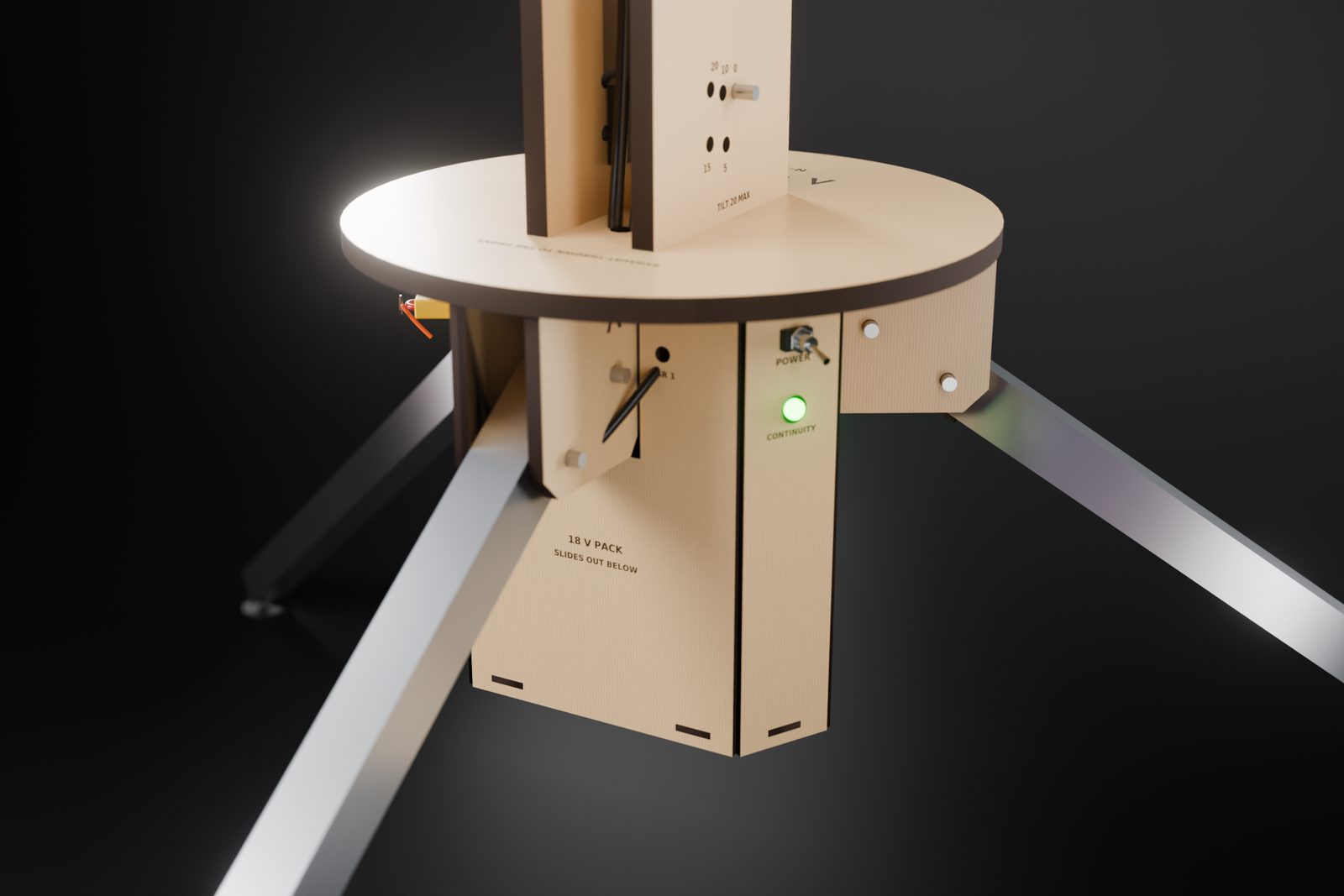
Our planned Ignis pad box, Ignis, is designed with a key, an ARM step and a FIRE step: see Harbour and the launch link. It is still in the planning stage and has not been used at a launch. The flight computer in NOVTAR Solace fires nothing.
People, fire and first aid (sections 5.6 and 5.7)
- Keep the launch area to the people who are needed, before, during and just after launch, and keep to the safe distances. Spectators must not handle or collect rockets without the flier's agreement, and children need responsible adults looking after them.
- Plan for fire: remove flammable material, wet dry vegetation, and have fire buckets or extinguishers ready.
- Keep a first aid kit and someone who can use it close to the launch area, with contents that suit cuts, slips and falls, and burns.
- Have the site location, access, contact numbers and any medical details ready for an emergency call.
Questions
How big does a model rocket launch site need to be in the UK?
UKRA sets a minimum circle diameter by motor impulse, from 30 m for an A class motor to 450 m for H to M. Half the maximum expected altitude can set a bigger minimum.
How far away should spectators stand?
At least the minimum launching distance for the motor, for example 5 m for a single D class motor and 15 m for H. The RSO may reduce it only for people needed to run the launch.
Do I need a launch controller with a key?
Yes. The code asks for a removable safety key that stops ignition and a momentary button that cuts the circuit when released.
When should the igniter go into the motor?
Last. Estes says not to install an igniter until you are ready to fly, and never to connect the controller to an igniter in a motor unless the rocket is on the pad. Take the safety key out and carry it with you while you connect the clips.
Who arranges the NOTAM and permission?
Usually the club or launch organiser. The code says to submit a NOTAM to the CAA at least 28 days ahead if flights are expected to go above 120 metres.
For fitting the igniter and connecting the clips, see how to fit a model rocket igniter safely.
For the launcher itself, see what a model rocket launcher is.
Next steps
- How to start a model rocket club in the UK
- How far will a model rocket drift in the wind?
- Flying at a UKRA club launch
- Launch rails and thrust-to-weight
- Joining UKRA and finding a club
- How far away should you stand from a model rocket?
- NOVTAR safety page
Read the code itself, and follow the RSO on the day: UKRA Safety Code.