Updated 2026-11-27 · 4 min read
Where does this come from?
The example is in the Estes report "Aerodynamic Drag of Model Rockets" (TR-11, by Dr Gerald Gregorek), chapter VI. UKRA lists it on its Resources page and OpenRocket hosts a scanned copy. We read it on 27 November 2026. It is a US report about one sport rocket with a 1 inch body, four streamlined fins and a 2 inch launch lug, flying at 100 feet per second. The numbers are the report's, not measurements of ours.
What are the five parts of the drag?
The report adds up the drag coefficients of the parts. For a start on the drag coefficient itself, see what is the drag coefficient of a model rocket.
| Part | Smooth (laminar) flow |
|---|---|
| Nose and body tube | 0.079 |
| Base (the blunt back end) | 0.104 |
| Fins and fin-body interference | 0.1262 |
| Launch lug | 0.030 |
| Total | 0.3392 |
The report says the total is 0.339. Our arithmetic from the same four rows gives 0.3392, so it matches.
How much comes from the base?
Almost 30 per cent of the total, the report says, and about 24 per cent comes from the body. The fins add about 25 per cent, and the rest is the launch lug and the interference where the fins meet the body. The report says the base is therefore a part to cut down if you can. Our guide on how to reduce drag covers what it suggests.
What happens if the air flow turns rough?
The report repeats the sum with a turbulent boundary layer on every surface. The parts become 0.229 for the nose and body, 0.061 for the base, 0.166 for the fins, 0.0517 for interference and 0.030 for the lug. The total is 0.5377, an increase of almost 60 per cent over the smooth case. Our arithmetic gives 58.5 per cent. When only the body goes turbulent the report gets a total of 0.446, and more than half of the drag then comes from the body. That is why a smooth finish matters. See how to paint a smooth finish.
How much drag does a launch lug add?
The report could not find much test data on soda straws and similar tubes, so it set limits. For a 1 inch body and a 1 inch long lug, the lug's drag coefficient must be more than 0.008 and less than 0.035. For the 2 inch lug in the example it uses 0.035, the top of the range, to allow for misalignment. The report adds that for a small body tube a lug can be an appreciable part of the total drag. See what a launch lug is.
What about the fins and the body meeting?
The report says interference drag, where the fins meet the body, is hard to analyse. It uses a rough method: count the whole fin area, including the part hidden inside the tube. The extra surface area gives a drag increase that is about equal to the interference drag. It says this is better than guessing a correction factor of 1.05 or 1.10. See what fin shape gives the least drag.
For the idea behind the boundary layer, see what a boundary layer is.
What does this mean for NOVTAR Solace?
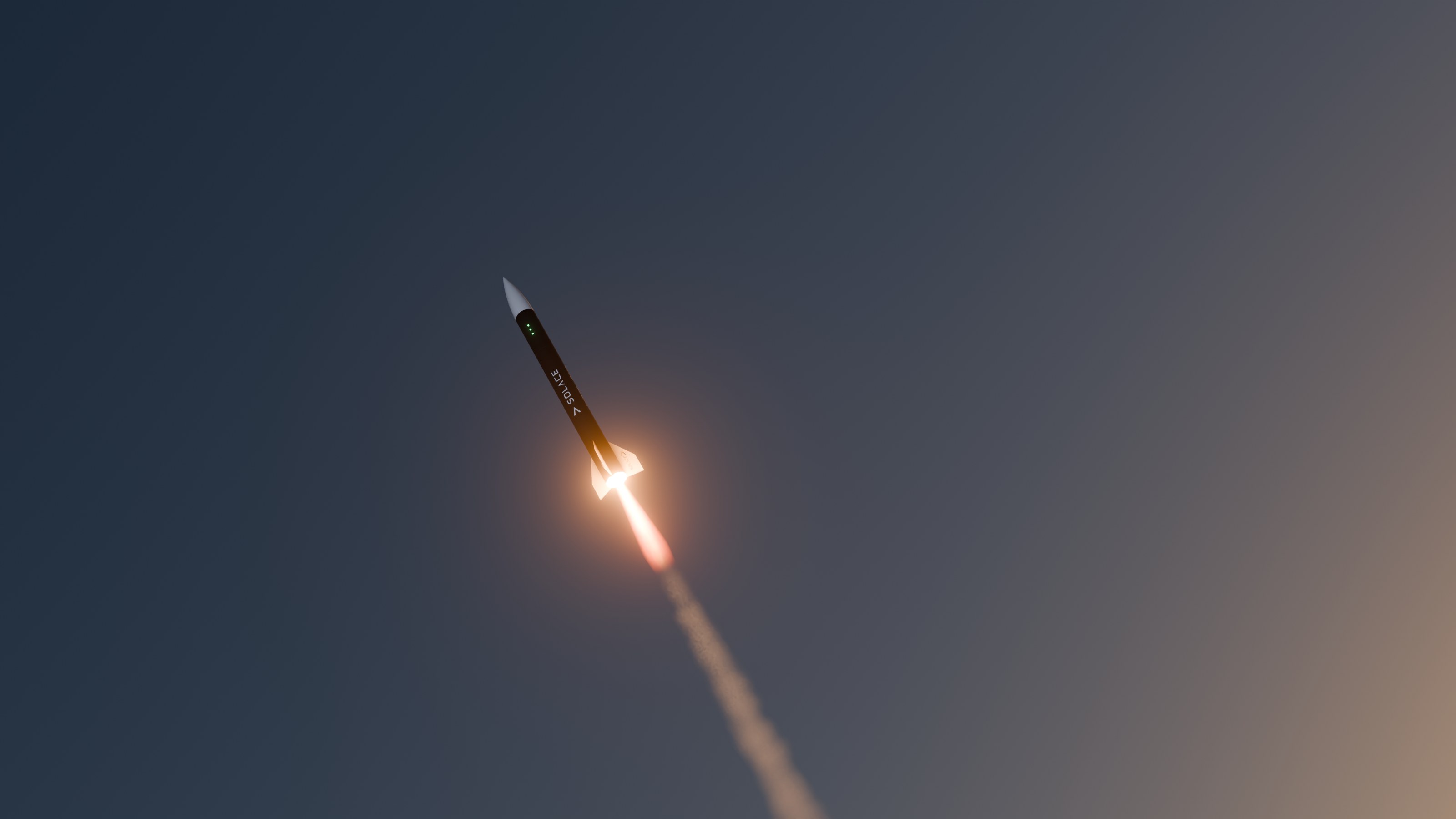
NOVTAR Solace is in design and has not flown. The report is a worked example for one different rocket, so we do not quote its figures for Solace. What carries over is the order of the parts: the base, the body and the fins are where drag comes from. Follow the UKRA Safety Code and use certified motors only.
Questions
What causes drag on a model rocket?
Estes TR-11 splits it into the nose and body tube, the base, the fins, the interference where fins meet the body, and the launch lug. In its worked example the base is almost 30 per cent of the total.
Does a rough surface really add that much drag?
In the report's example, a turbulent boundary layer on every surface raised the drag coefficient from 0.339 to 0.5377, an increase of almost 60 per cent.
Is the blunt base a big part of drag?
Yes. In the report's smooth flow case the base was almost 30 per cent of the total drag, which is why it says to try to cut it down.
How much drag does NOVTAR Solace have?
We do not know. NOVTAR Solace is in design and has not flown, and we have not measured its drag.