Updated 2026-11-27 · 4 min read
Where does this come from?
The facts are from NASA Glenn's Beginner's Guide to Aeronautics page "Boundary Layer", read on 27 November 2026. NASA says the full theory is beyond a beginner's guide and is usually studied at university, so this guide stays at the same level.
What is a boundary layer?
NASA says that as air moves past an object, the molecules right next to the surface stick to it. They slow down the molecules just above them, and those slow the ones above them, with less effect further out. The result is a thin layer in which the air speed rises from zero at the surface to the free stream speed. Engineers call it the boundary layer because it forms on the boundary of the fluid.
Why does it matter?
NASA says the details of the flow inside the boundary layer are very important for wing stall, for the skin friction drag on an object, and for the heat transfer in high speed flight. The effects on lift are held in the lift coefficient and the effects on drag are held in the drag coefficient. For how those add up on a model rocket, see where the drag on a model rocket comes from and the drag coefficient of a model rocket.
What is the difference between a laminar and a turbulent boundary layer?
NASA says a boundary layer is either laminar (layered) or turbulent (disordered), depending on the Reynolds number. At lower values the layer is laminar and the speed changes smoothly as you move away from the surface. At higher values it is turbulent, with unsteady swirling flow inside the layer.
NASA gives the Reynolds number as the speed times the density times a characteristic length, divided by the viscosity coefficient. It describes it as the ratio of inertial forces to viscous forces. Our arithmetic from that formula: a longer object or a higher speed raises the Reynolds number, all else being equal.
Can the boundary layer change an object's shape?
NASA says the outside flow reacts to the edge of the boundary layer as it would to a physical surface. So the boundary layer gives an object an effective shape that is usually slightly different from its real shape. It may also lift off, or separate, from the body, which creates an effective shape much different from the real one. NASA says this is the reason for wing stall at high angle of attack. The cause it gives is that the flow in the layer has very low energy, so changes in pressure drive it more easily.
Does this matter for a model rocket?
It is one reason drag is not just about shape. Our guides on what affects drag and how to reduce drag set out the parts of drag we have sourced. For a smooth finish, see how to paint a model rocket. NASA's page does not give model rocket figures, so we give none.
What about NOVTAR Solace?
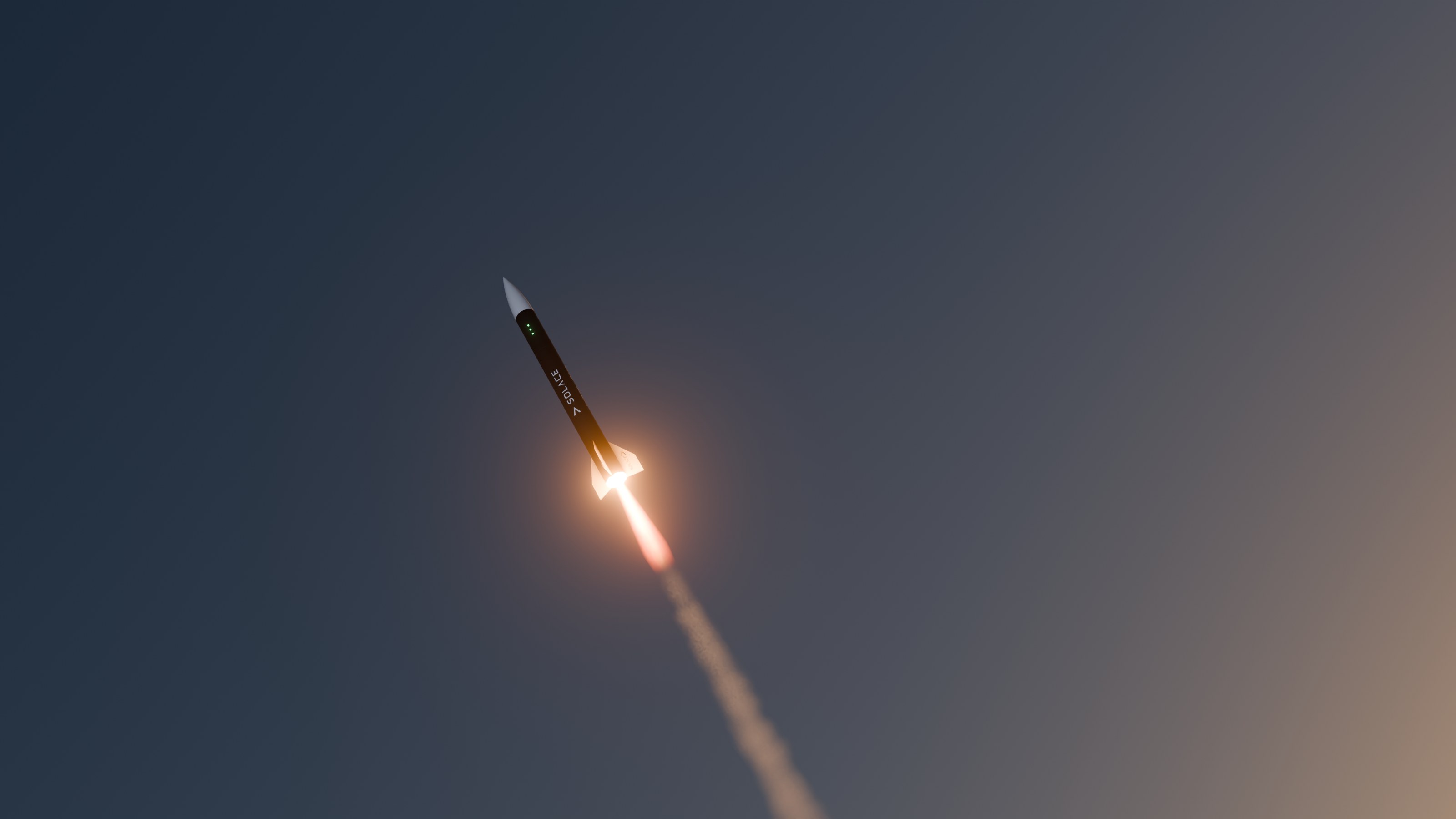
NOVTAR Solace is in design and has not flown. This guide makes no claim about its drag. It is planned to fly at a UKRA club launch under a Range Safety Officer.
Questions
What is a boundary layer?
NASA Glenn says it is a thin layer of fluid near a surface in which the speed changes from zero at the surface to the free stream value.
Why does the boundary layer matter for drag?
NASA says the flow inside it is very important for the skin friction drag on an object, and the effects on drag are contained in the drag coefficient.
What is the difference between laminar and turbulent flow?
NASA says laminar is layered, with a smooth change in speed, and turbulent is disordered, with unsteady swirling. Which one you get depends on the Reynolds number.
What is the Reynolds number?
NASA says it is the ratio of inertial forces to viscous forces. It equals speed times density times a characteristic length, divided by the viscosity coefficient.
What is flow separation?
NASA says the boundary layer can lift off from the body, creating an effective shape much different from the physical shape. It is the reason for wing stall at high angle of attack.
Has NOVTAR Solace flown?
No. NOVTAR Solace is in design and has not flown.
Next steps
- What affects drag on a model rocket
- Where does the drag on a model rocket come from?
- How to paint a model rocket smooth
- What is the Reynolds number for a rocket?
Read the original: NASA Glenn, Boundary Layer.