Updated 2026-11-29 · 3 min read
What are the six recovery methods?
The Estes manual (2012, a US document) says most recovery systems depend on drag to slow the rocket, turning it from a streamlined object into one the air can "catch against". It names six main methods: featherweight recovery, streamer recovery, tumble recovery, parachute recovery, helicopter recovery and glide recovery. It lists them by name only, so the short notes below are plain reading of the names, not Estes definitions.
- Streamer: a strip of material pulled out at ejection.
- Parachute: a canopy pulled out at ejection. Our parachute shape guide and packing guide cover this one.
- Glide: the rocket flies down as a glider. See our boost glider guide.
- Tumble, featherweight and helicopter: the rocket slows by changing its own shape or lightness. Check the maker's instructions for how a particular kit does it.
What does UKRA require for certification flights?
On its High Power Certification page (read 26 November 2026) UKRA says all certification flights must use an active recovery method. It defines that as a method that changes the physical configuration of the rocket, such as a parachute, streamer or helicopter, to reduce the vertical descent rate for a safe recovery. It adds that passive methods such as airframe drag (tumble recovery) are not permitted for any certification flight. For dual deployment, the first recovery stage must stop a ballistic descent, for example with a drogue parachute.
What happens to a booster stage?
The Estes manual says most lower stages are designed to be unstable after separation, so they tumble, flutter or glide down with no parachute or streamer, and should be painted a bright colour to be seen on the ground. Our two-stage guide covers staging.
What if the wind carries the rocket away?
Estes suggests in windy conditions a smaller parachute or a streamer, taping the shroud lines half way up so the canopy does not open fully, or cutting a spill hole in the centre. Our drift guide shows how far a rocket can move. UKRA's Safety Code also asks that the rocket returns safely and that nobody collects it until the descent is over. See our UKRA recovery guide.
Questions
What does recovery mean in model rocketry?
Recovery is how the rocket is brought back down so it can be flown again. The Estes manual says most recovery systems depend on drag to slow the rocket, turning it from a streamlined object into one the air can catch against.
What are the main model rocket recovery methods?
The Estes technical manual lists six: featherweight, streamer, tumble, parachute, helicopter and glide.
Can I use tumble recovery for UKRA certification?
No. UKRA says passive methods such as airframe drag (tumble recovery) are not permitted for any certification flight. Certification needs an active method.
Does a streamer or a parachute drift less?
Estes suggests swapping a parachute for a smaller parachute or a streamer in windy conditions. The manual does not give drift figures.
How do booster stages come down?
Estes says most are designed to be unstable after separation and tumble, flutter or glide down without a parachute or streamer.
Does a parachute or streamer need protecting from the ejection charge?
Yes. The Estes manual says parachutes and streamers must be protected from the heat of the ejection charge with flame-resistant recovery wadding, never regular tissue paper, which can keep smouldering and start grass fires. See our recovery wadding guide.
What recovery will NOVTAR Solace use?
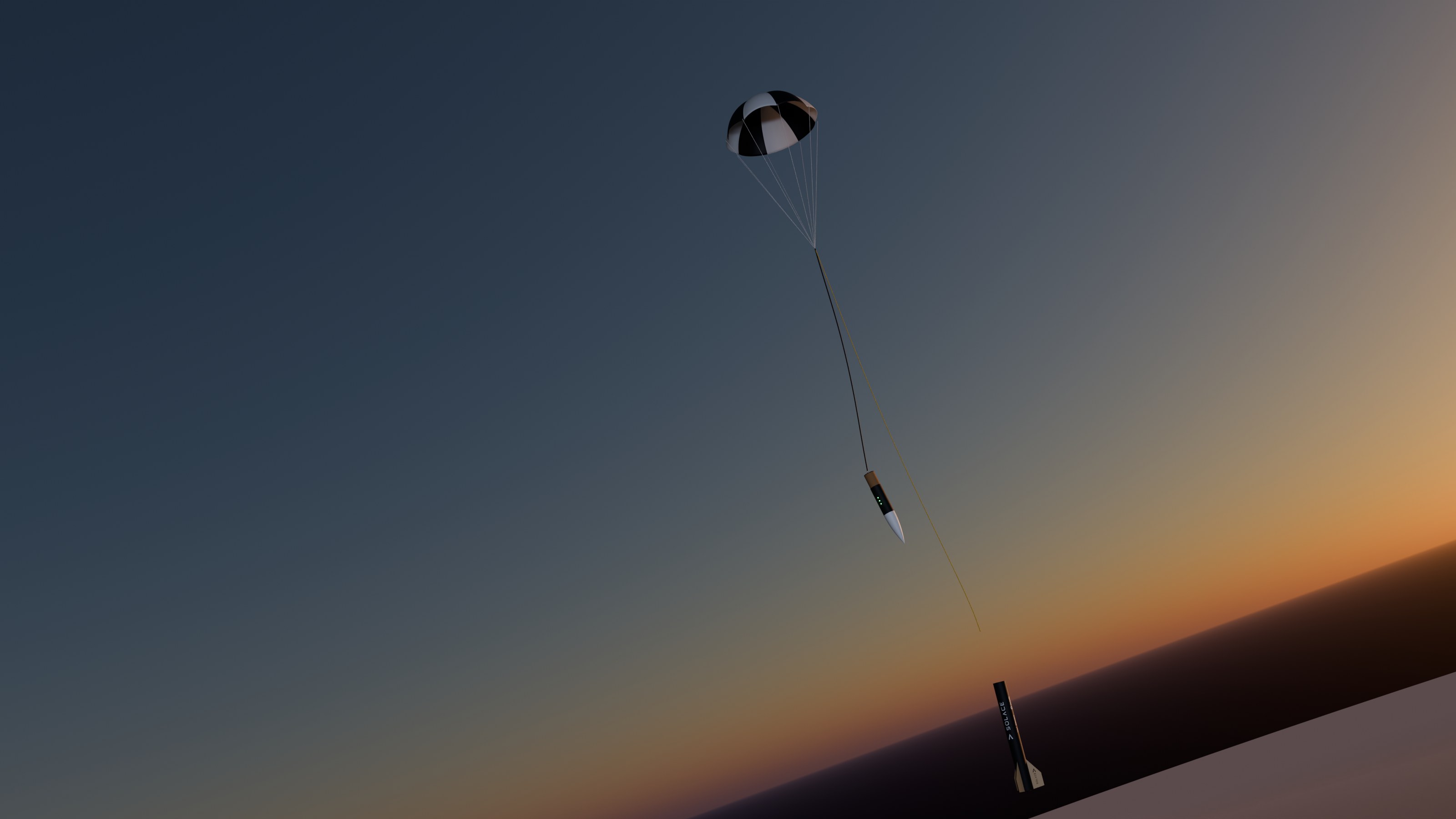
NOVTAR Solace is in design and has not flown, so we have no recovery results to report.
Next steps
- Model rocket recovery in the UK
- Why did my model rocket parachute not open?
- UKRA Level 1 certification explained
Read the code before you fly: UKRA Safety Code. Sources: UKRA High Power Certification (read 26 November 2026) and the Estes Model Rocketry Technical Manual (2012).