Updated 2026-11-29 · 4 min read
Where does this come from?
The facts are from "American Rocketry Challenge: A Beginner's Guide" (2026), written by Gregory P. Kennedy and published by Estes Industries, LLC as an educational resource, read on 29 November 2026. The contest is American and run by the Aerospace Industries Association and the National Association of Rocketry (NAR), so its rules do not apply to UK clubs. We use the guide only for the method. Anything marked "our reading" is ours.
What is the engineering method?
The guide calls it a systematic approach used to reach the desired solution to a problem. Because it seeks a solution to a specific problem, it says the method is different from the scientific method.
What are the seven steps?
The guide shows them in a numbered figure:
| Step | Label in the guide |
|---|---|
| 1 | Ask |
| 2 | Imagine: brainstorm solutions and research ideas |
| 3 | Plan: select and sketch ideas |
| 4 | Create: build a model or prototype |
| 5 | Test: collect data and evaluate the solution |
| 6 | Evaluate: optimise and redesign the solution |
| 7 | Communicate: share the results |
The guide gives a short label only for steps 2 to 7 in the text we could read. Our reading: the "Ask" step is where you write down what the rocket has to do.
What if the first prototype misses the target?
The guide says that if the prototype is too far off the requirements, the team may have to drop back to the design phase and try a different approach. It also says to keep detailed documentation of the design process and each cycle.
How many rockets should you build?
The guide says that once you have a design that delivers the required performance, you should build several contest rockets, so there is a backup if something happens to the main one.
How do you check a design before you build it?
The guide says the key to safety is a stable, predictable flight, and that for stability the centre of pressure (CP) should be at least one body diameter behind the centre of gravity (CG) at launch. It recommends design software such as OpenRocket, which calculates the CP and CG, so you can eliminate unstable designs before building.
The guide also says the software lets you try different motors to narrow down the most suitable one. For practice it suggests designing and building a rocket in the A to C power range first, then building and flying it to see how close the prediction was to the real flight.
Our reading: that is the loop above in miniature. Simulate, build, fly, compare, then change the design.
Does this apply to a UK club?
The steps do, as general practice. The contest rules, the NAR mentor scheme and the Estes parts it names are specific to that American contest. For UK flying, the UKRA Safety Code and your club's Range Safety Officer decide what can launch.
What about NOVTAR Solace?
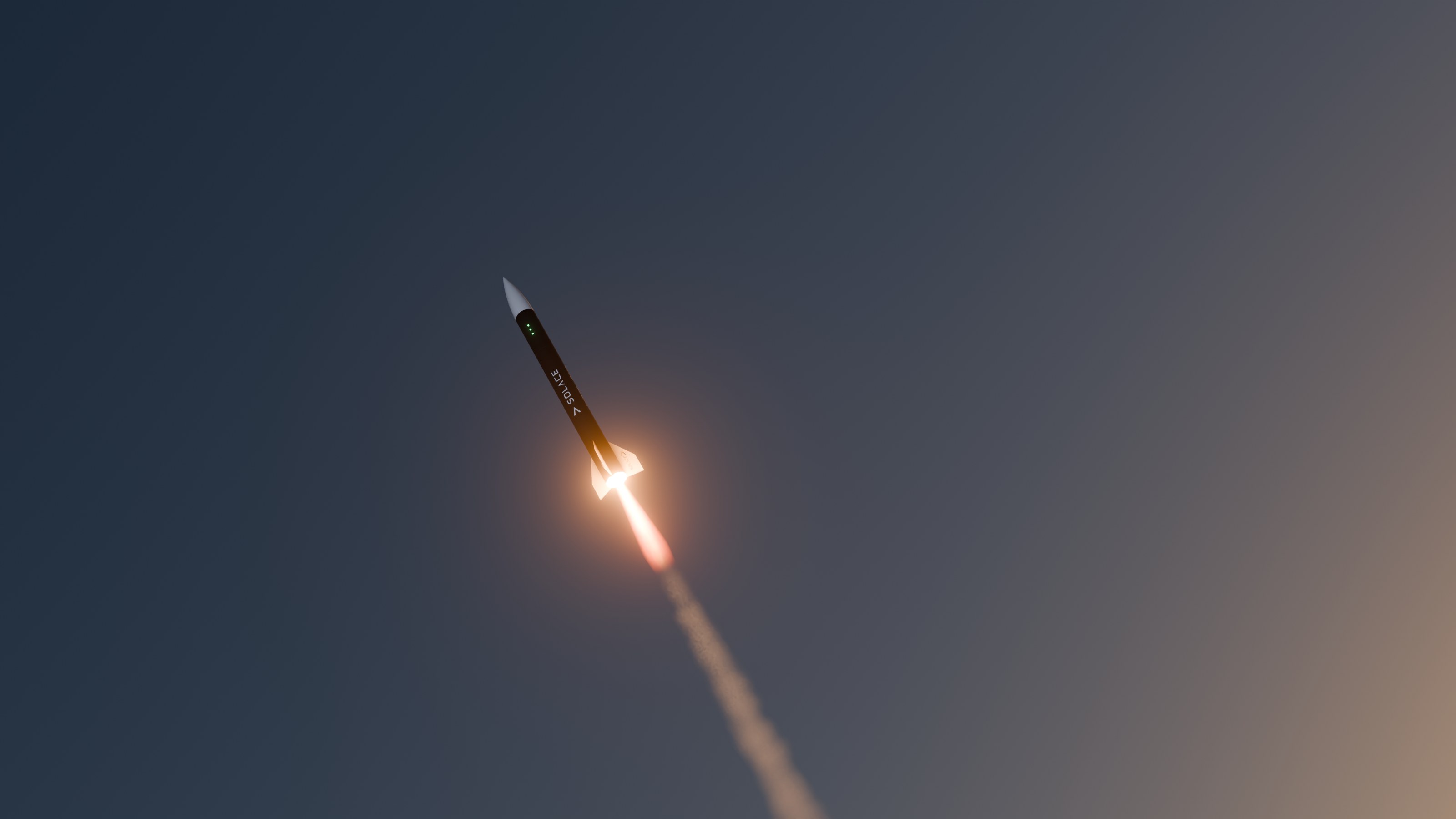
NOVTAR Solace is in design and has not flown. Nothing here is a Solace test result.
Questions
What is the engineering method for a model rocket?
Estes describes seven steps in its 2026 guide: ask, imagine, plan, create, test, evaluate and communicate. It is a systematic way to reach a solution to a specific problem.
How is it different from the scientific method?
Estes says that because the engineering method seeks a solution to a specific problem, it differs from the scientific method.
What do you do if the prototype does not meet the target?
The guide says the team may have to go back to the design phase and try a different approach, keeping detailed documentation of each cycle.
How far behind the CG should the CP be?
The Estes guide says at least one body diameter behind the CG at launch.
Should you build more than one rocket?
The guide says to build several contest rockets once the design works, so you have a backup.
Has NOVTAR Solace flown?
No. NOVTAR Solace is in design and has not flown.
Next steps
- How to simulate a model rocket with OpenRocket
- Model rocket stability: CG and CP
- How to swing test a model rocket
- UKRA Team Project Support for school rocket teams
Read the original: Estes, American Rocketry Challenge: A Beginner's Guide. Your club's RSO decides on the day.