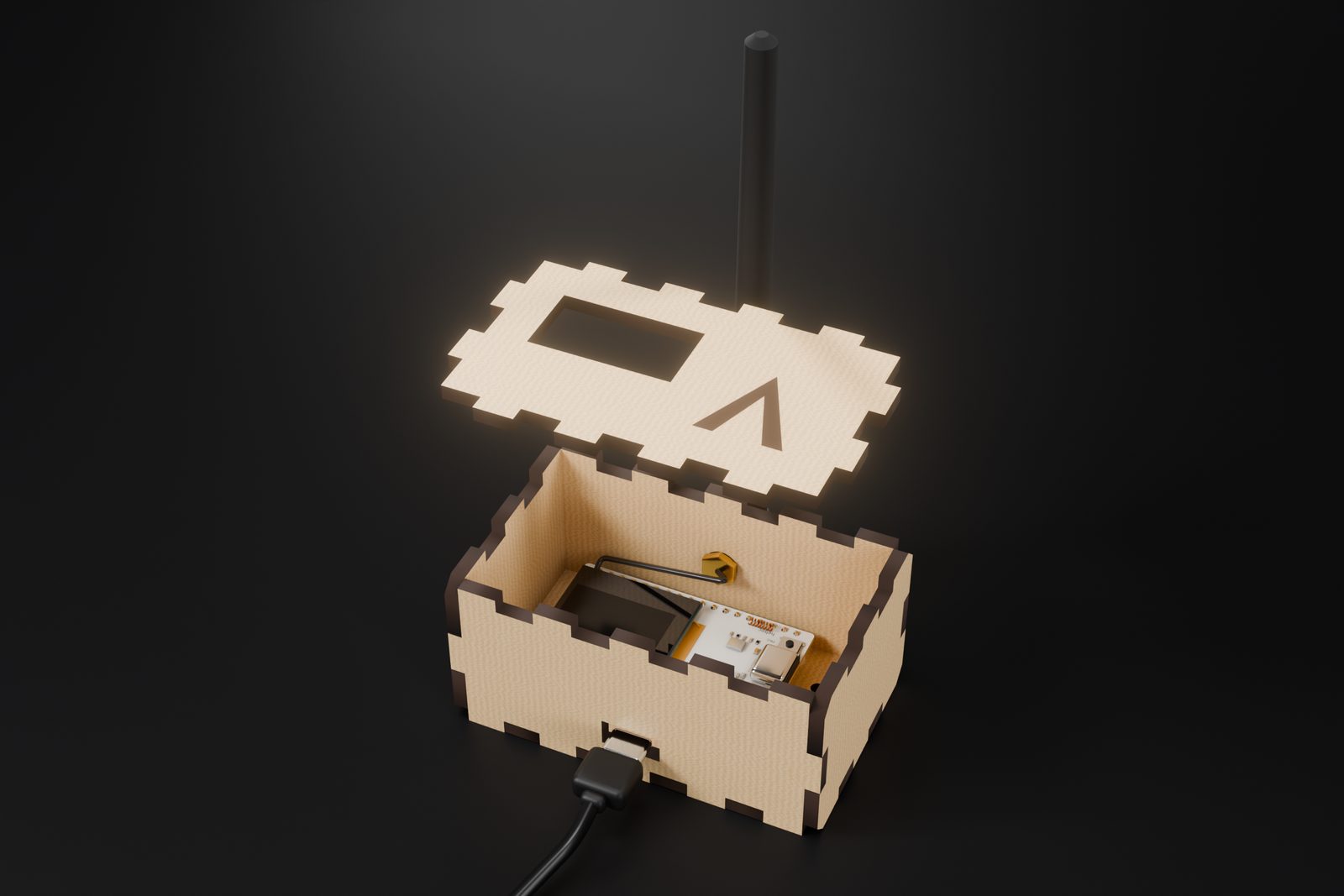
Updated 2026-11-22 · 3 min read
What does telemetry mean?
The Canadian Space Agency's vocabulary defines it as the science of measuring a set of quantities and transmitting the results to a remote location where the data are interpreted, displayed and/or recorded (page read 22 November 2026). The word comes from the same idea as a thermometer on a distant weather station: the measuring and the looking happen in different places.
Three parts make a telemetry link:
- Sensors on the rocket that measure, such as a barometer for height.
- A radio link that carries the readings.
- A receiver and display on the ground that interpret them.
What does a model rocket send?
Not much, by design. A flight is short and the radio has to share the air with other users, so each message is small. In NOVTAR Solace's design each packet is 25 bytes and goes twice a second, holding the time since power on, flight phase (pad, boost, coast, descent or landed), height, speed and a set of status checks. It carries no GPS position. Our LoRa guide shows every field and works out the time on air.
What is the difference between telemetry and logging?
Telemetry is live and can be lost. Logging is complete and safe on the rocket.
| Telemetry | Logging | |
|---|---|---|
| When you see it | During the flight | After you recover the rocket |
| What can go wrong | Radio drops out, packets lost | Rocket lost, card damaged |
| Detail | Coarse, a few readings a second | Fine, every sample |
So a flight computer normally does both, as our comparison of altimeters, loggers and flight computers explains. Rocketry for Schools' guide to a home-built altimeter lists logging to an SD card or memory chip as a standard part. Telemetry adds a live view on top.
What is telemetry good for on a model rocket?
- Seeing the flight as it happens, including whether the rocket reached the top and started down.
- A last known state. If the rocket drifts out of sight, the last packets say what phase it was in.
- Pad checks. Status flags tell you the sensors and logging are working before launch.
It is not a recovery system and does not control the rocket. NOVTAR Solace's ground link can send only a ping and a locate command, and nothing that arms, steers or fires anything.
What are the limits?
Radio range in a real flight is unknown until it is measured. We have not tested NOVTAR Solace's link in the air, and anything about range on this page is a statement of what we do not know. Telemetry also does not replace the UKRA rules: your club's Range Safety Officer decides what is allowed on the day, and our electronics rules guide gives our reading of the code.
Questions
What does telemetry mean?
Measuring quantities at a remote place and sending the results to a receiver where they are interpreted, displayed or recorded (Canadian Space Agency vocabulary).
What does a model rocket telemetry system send?
Short packets of height, speed, flight phase and status checks. NOVTAR Solace's design sends 25 bytes twice a second.
Is telemetry the same as a data logger?
No. Telemetry is a live radio feed and can drop out. A logger writes every sample to memory on the rocket. Most flight computers do both.
Does telemetry control the rocket?
No. It reports. NOVTAR Solace's ground link has no command that arms, steers or fires anything.
Has NOVTAR Solace sent telemetry in flight?
No. NOVTAR Solace is in build and has not flown.
Next steps
- LoRa telemetry for a model rocket
- Radio rules for a model rocket tracker in the UK
- Beacon, the ground station
- Mission Control
Read the code before you fly: UKRA Safety Code. Your club's RSO decides on the day.