Updated 2026-11-27 · 4 min read
Where does this come from?
The steps are from NASA Glenn Research Center's "Paper Rockets" activity, contributed by Gregory Vogt of Oklahoma State University and edited by Roger Storm. The page was last updated on 13 May 2021 and we read it on 27 November 2026. NASA's page includes a fin pattern to copy, which we do not reproduce. We add our own comments, marked as ours.
What do you need?
NASA lists scrap bond paper, cellophane tape, scissors, a sharpened fat pencil and a milkshake straw that is slightly thinner than the pencil. That is all. There is no motor, no flame and no fuel.
How do you make it?
- Roll the body. Cut a narrow rectangular strip of paper about 5 inches long. Roll it tightly round the fat pencil, tape the tube, and slide it off.
- Cut the crown. Cut crown points into one end of the tube and slip it back onto the pencil.
- Seal the nose. Slide the points to the pencil tip, squeeze them together and tape them shut. The pencil point supports the paper while you tape. As an alternative, NASA says you can fold over one end and seal it with tape.
- Check for leaks. Take the tube off the pencil and blow gently into the open end. If air escapes easily, add more tape.
- Add the fins. Cut out two sets of fins using NASA's pattern, fold them as it shows, and tape them near the open end. The tabs make taping easy.
- Fly it. Slip the straw into the open end, point the rocket in a safe direction and blow sharply through the straw.
Is it safe?
NASA warns not to aim the rocket at anyone, because it could poke an eye. We would add that you should fly it outdoors or in a clear space, and wear eye protection if children are flying them. That advice is ours, not NASA's. A paper rocket is not covered by the UKRA Safety Code, which is for rockets with motors. See our short form of the UKRA code.
What can you test with it?
NASA suggests the paper rocket demonstrates how rockets fly through the air and why fins matter for control. It says to try a rocket with no fins and one with the fins at the front to see how each flies. You can also practise a ballistic flight towards a target, or make a rocket with wings so that it glides. See what fins do on a model rocket for the idea behind the fins test.
How is it different from a model rocket?
A paper rocket gets one short push of air from your breath and then coasts. A model rocket carries a certified motor that burns for a second or two, then deploys a recovery system. If you want to go on to real motors, the UKRA club route is the way, and our guide for scouts, schools and youth groups says where to start.
Another simple rocket is the bottle rocket, covered in How does a water rocket work? NASA Glenn explains.
Another rocket with no motor is covered in How does an air rocket work? NASA Glenn explains.
What about NOVTAR Solace?
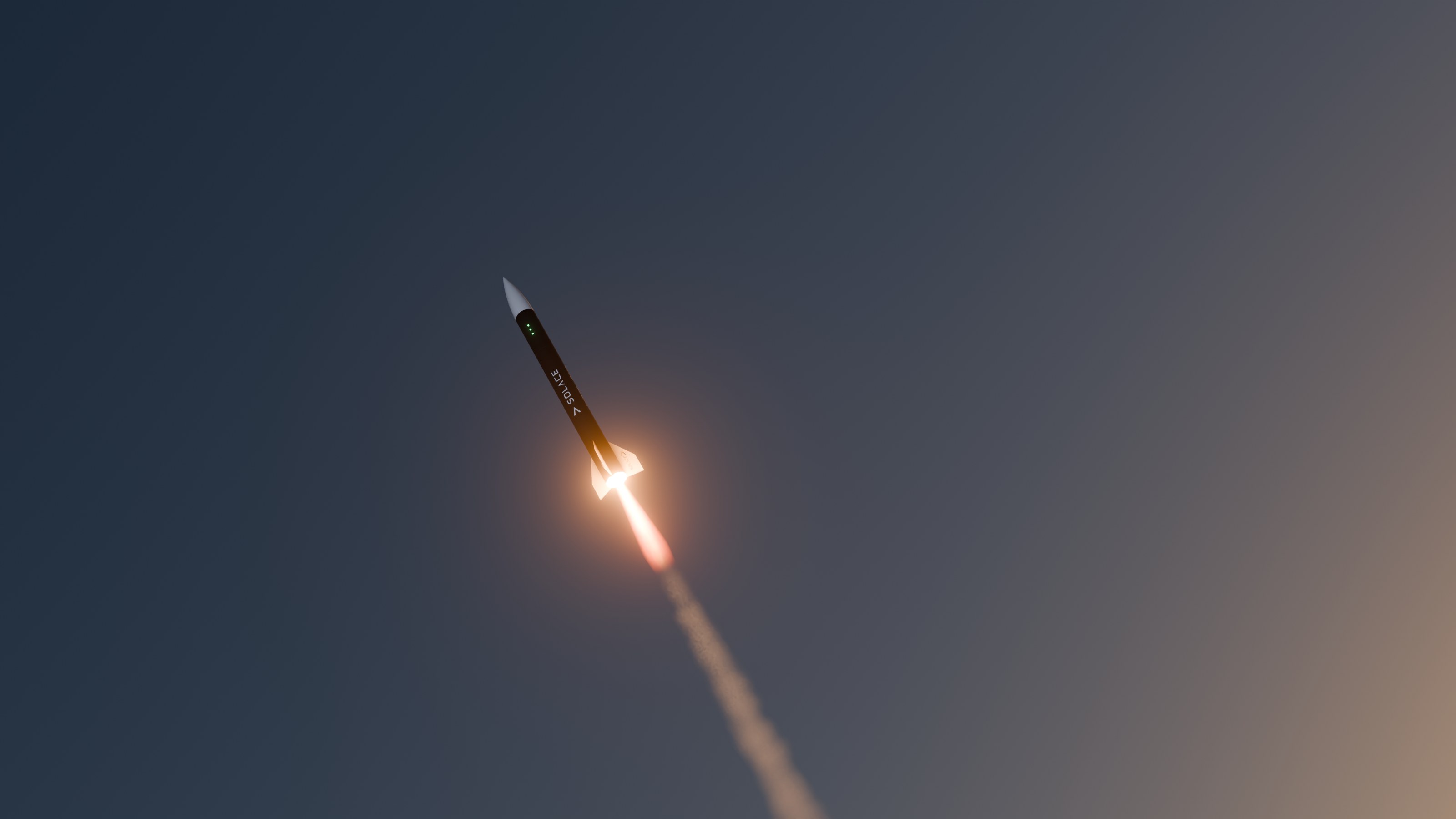
NOVTAR Solace is in design and has not flown. It will fly on a certified motor at a UKRA club launch under a Range Safety Officer. A paper rocket is a good first lesson in why a rocket needs fins, and our guide to how to build a model rocket in the UK is the next step.
Questions
How do you make a paper rocket that flies?
Roll a strip of paper about 5 inches long round a fat pencil and tape it, seal one end as a nose, tape paper fins near the open end, and blow sharply through a straw that fits the open end. NASA Glenn publishes the steps.
What do I need to make a paper rocket?
Scrap bond paper, cellophane tape, scissors, a sharpened fat pencil and a milkshake straw slightly thinner than the pencil, according to NASA Glenn.
Why does a paper rocket need fins?
NASA says the paper rocket shows the importance of fins for control. Try one with no fins and one with fins at the front to see how they fly.
Is a paper rocket safe?
It has no motor, but NASA says not to aim it at anyone because it could poke an eye.
Has NOVTAR Solace flown?
No. NOVTAR Solace is in design and has not flown.