Updated 2026-11-24 · 3 min read
What is a guidance system?
NASA Glenn's Beginners Guide to Aeronautics (page last updated 20 November 2023, read 24 November 2026) says a full-scale rocket has four major components: the structural system or frame, the payload system, the guidance system and the propulsion system. NASA says the guidance system includes very sophisticated sensors, on-board computers, radars and communication equipment.
What does it do?
NASA gives it two main jobs during launch: to provide stability and to control the rocket during manoeuvres. It says the guidance system can be programmed to intercept targets or to fly into orbit.
How does a rocket turn?
NASA says the motion of any object in flight is a combination of the movement of its centre of gravity and its rotation about the centre of gravity. All the control methods produce a torque about the centre of gravity, which makes the rocket rotate. One method is gimbaled thrust.
When do you not need one?
A stable rocket is one that naturally returns to its flight configuration after being disturbed. NASA says that for simple rockets flying within the atmosphere, stability is assured if the aerodynamic forces acting through the centre of pressure stay below, meaning behind, the centre of gravity. Fins at the bottom, or weight at the top, set this up. That is the idea in our stability guide. For complex rockets, or those flying above the atmosphere, NASA says the guidance system can provide stability using the same methods it uses to manoeuvre.
Is a flight computer a guidance system?
Our reading: not by itself. A flight computer that only measures and records, as in our flight computer, altimeter and data logger guide, does not steer. It becomes part of a guidance system only when its output moves something, such as a nozzle or a fin. In the UK, UKRA treats that as active stabilisation, which needs approval; see our electronics, TVC and GPS guide.
What about NOVTAR Solace?
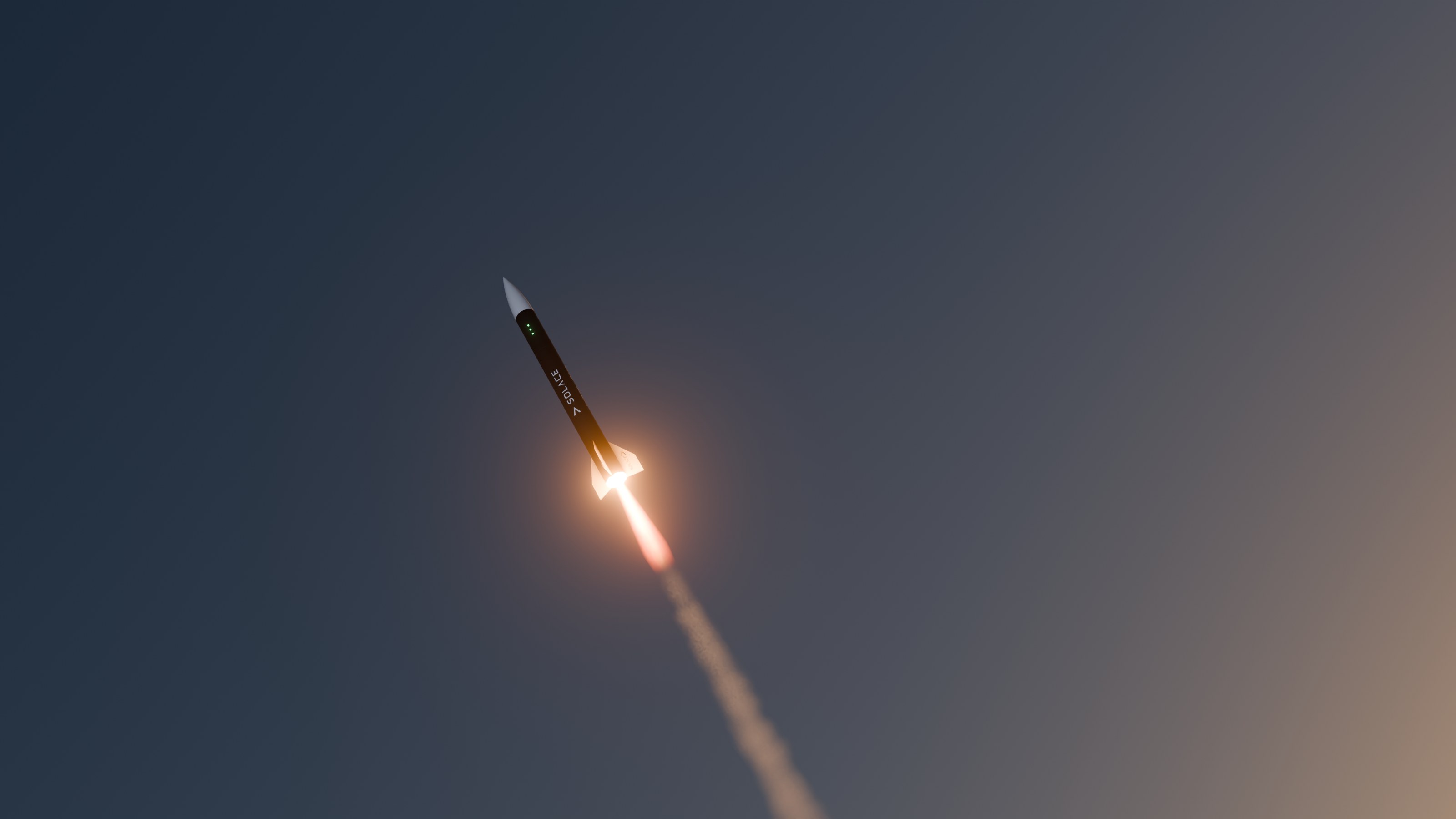
NOVTAR Solace is in build and has not flown. Its flight computer records data and fires nothing. Its Solace TVC module is in design and has not been built or flown. Solace is stabilised by its fins, in the way NASA describes for simple rockets.
For the three axes a rocket turns about, see pitch, yaw and roll on a model rocket.
Next steps
- Read NASA's guidance system page.
- Check your rocket's centre of gravity and centre of pressure.
- Read the UKRA rules before adding anything that steers.
- See where guidance sits among the four main systems: What are the four main systems of a rocket?
Questions
What is a rocket guidance system?
NASA Glenn says it is the part of a full-scale rocket that includes sensors, on-board computers, radars and communication equipment, and gives the rocket stability and control.
Does a model rocket need a guidance system?
No. NASA says a simple rocket in the atmosphere is stable if the centre of pressure is behind the centre of gravity, which fins and nose weight provide.
What are the two jobs of a guidance system?
To provide stability and to control the rocket during manoeuvres.
Is a flight computer the same as a guidance system?
Not on its own. A recording-only computer measures but does not steer. It becomes guidance when its output controls something.
Has NOVTAR Solace flown?
No. NOVTAR Solace is in build and has not flown.